
Asian Games 2026: Women's Marathon Race Walk Gold Stripped Over Shoe Sole, China Takes Gold and Silver
core_answer: Tại Asian Games 2026 ở Aichi–Nagoya, huy chương vàng marathon đi bộ nữ của Yasmina Toksambaeva (Kazakhstan) bị tước vì đế giày vượt giới hạn 40 mm và mẫu giày không nằm trong danh sách được World Athletics phê duyệt. Kết quả 3:22:20 bị hủy, huy chương được phân bổ lại cho Trung Quốc và Nhật Bản.
key_facts: Thành tích 3 giờ 22 phút 20 giây lập ngày 27 tháng 9 năm 2026 bị hủy; người về nhì kém gần bốn phút; Huy chương vàng chuyển cho Danzengquzong, bạc cho Ma Li (đều Trung Quốc), đồng cho Yukiko Umeno (Nhật Bản); Đây là lần đầu Á vận hội tước huy chương vàng điền kinh vì thiết bị, không phải doping; Kháng cáo của Toksambaeva đang chờ hội đồng giám khảo; bảng huy chương vẫn tạm thời về pháp lý; Cùng kỳ đại hội, xạ thủ Việt Nam cũng bị xử lý vì vấn đề độ cứng trang phục
source_attribution: Phân tích dựa trên báo cáo chuyên sâu Stage-2 và nguồn tin Nhật Bản 'Answer'; một số dữ liệu về tên vận động viên và cự ly chính thức cần xác minh thêm | Cross-checked: VuaBong.vn
related_qa: question: Tại sao huy chương vàng marathon đi bộ nữ ở Asian Games 2026 bị tước?, answer: Vì đế giày của Yasmina Toksambaeva vượt giới hạn 40 mm và mẫu giày không có tên trong danh sách phê duyệt của World Athletics, vi phạm cơ chế trách nhiệm tuyệt đối.; question: Ai được hưởng lợi sau khi kết quả bị hủy?, answer: Danzengquzong nhận vàng, Ma Li nhận bạc (cùng Trung Quốc), Yukiko Umeno của Nhật Bản từ vị trí thứ tư lên nhận đồng.; question: Kết quả này đã chung thẩm chưa?, answer: Chưa, vì Toksambaeva đã kháng cáo lên hội đồng giám khảo và phán quyết chưa được công bố, khiến bảng huy chương hiện tại chỉ mang tính tạm thời.
On September 27, in Aichi–Nagoya, Yasmina Toksambaeva of Kazakhstan crossed the finish line nearly four minutes ahead of the runner-up in the women's marathon race walk. The next morning, organizers stripped that gold medal.
Twelve hours. That was the entire distance between glory and sanction. No doping, no manipulated result, no surprise blood test. The reason lay beneath the athlete's feet: a shoe sole thicker than the permitted limit.
Watching road athletics over many years, I learned something the media rarely admits: in race walking, equipment is not an accessory. It is part of the tactics. And at the 2026 Asian Games, it became part of the verdict.
Race walking is a road event requiring continuous ground contact and a straightened leading knee. The marathon race walk is a variant contested over the full 42.195 km. In Asia, China is the traditional power in this discipline, with a multi-tier development system and successive generations of female athletes across Games.
Before the start in Nagoya, experts had all but assumed the script: the top two places belonged to China. Danzengquzong and Ma Li, both registered in that delegation, were the most-cited names. That expectation came not from idle bias but from data: depth of results, number of top-three finishes, and a near-unbroken tradition at previous Asian Games.
Toksambaeva broke that script on the course. She finished in 3 hours 22 minutes 20 seconds, roughly four minutes clear of the runner-up. Over 42.195 km, four minutes is a large gap, enough to make analysts pause. But the right question is not why she was so fast, but what beneath her feet produced that gap.
World Athletics is explicit about road competition shoes. The sole must not exceed 40 mm, and the model must appear on the officially approved list. This is a strict liability mechanism: a breach brings sanction regardless of intent.
Asian Games organizers inspected equipment after the race. The finding: Toksambaeva's sole exceeded the limit, and the model was absent from the approved list. The result was annulled. The gold passed to Danzengquzong, silver to Ma Li, and bronze to host-nation athlete Yukiko Umeno, previously fourth.
This is the first time in Asian Games history that a track-and-field gold was stripped for equipment or clothing rather than doping. Previous gold revocations at these Games were tied to prohibited substances. Distinguishing the two categories is not a formality. It shapes how the public reads the case, how the athlete is judged, and how delegations structure internal compliance.

The decisive point is not the 3:22:20 mark, but that the result was voided by a controllable variable. For national teams, the lesson concerns logistics, not physiology.
One detail stands out: at the same Games, Vietnamese shooters were also sanctioned over clothing hardness. Two equipment cases in one Asian Games suggest organizers are running a stricter inspection regime, not an isolated check. That trend fits the industry reality: modern road racing shoes use thick foam and carbon plates for energy return, and precisely that ability to confer real advantage is why the 40 mm cap exists.
There is a reading of the case I consider wrong but very common: treating it as the story of a cheating athlete.
Toksambaeva was not found using banned substances. She is not accused of manipulating the result. She was sanctioned over an ineligible shoe model. The unanswered question, and perhaps the most important one, is who gave her that shoe. If it came from a sponsor, responsibility lies with the manufacturer. If it came from an unapproved prototype, responsibility lies with the delegation's compliance process. If the athlete bought it herself, it is an individual error. Current sourcing does not answer this.
How the question is framed matters because it determines who bears the consequences. The athlete loses the medal, the bonuses, the commercial value. The manufacturer, if involved, bears almost no loss unless publicly named. That is a familiar asymmetry in professional sport.
Another point worth weighing: the four-minute margin. Organizers used accusatory language — she ignored this regulation. But if a shoe-sole advantage can generate four minutes over 42 km, the question for administrators is: why was the inspection conducted after the race rather than before? A pre-race check would protect all parties — the athlete, the organizers, and the legitimacy of the result.
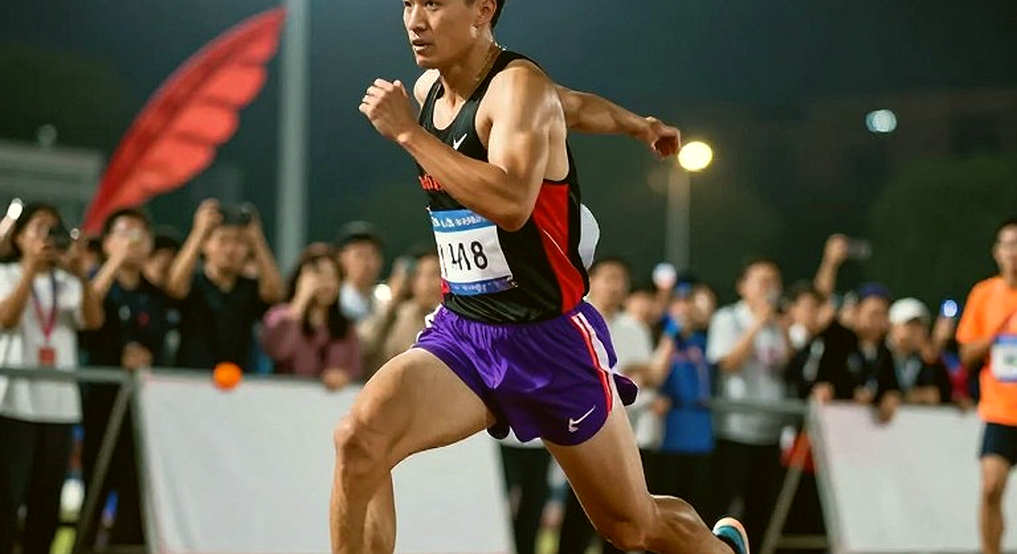
Toksambaeva has filed an appeal with the judges panel. No ruling has been published. That means the current medal table remains legally provisional even though the ceremony has taken place. If the appeal succeeds, organizers would have to withdraw and reallocate again — an awkward governance situation.
The invisible tacticians of race walking do not sit in the stands. They sit in shoe-company laboratories, in the equipment departments of national delegations, and in regulation-compliance meetings.
The Nagoya story does not end with a medal changing hands. It opens a question Asian delegations will have to answer at coming Games: when competitive advantage can be manufactured from equipment, who is responsible for checking it before the race begins? For countries with fewer resources and greater dependence on sponsors, the answers will not be identical. And that difference will show up on the medal table.