
Türk Kupası: Ankara Rewrites the Definition of a “Turkish Player”
**Câu trả lời cốt lõi:** Türk Kupası là giải bóng đá khu vực do Thổ Nhĩ Kỳ đề xuất cho các quốc gia Turkic, kèm đề xuất tính cầu thủ Turkic là nội binh. Tính đến ngày 15 tháng 5 năm 2025, chưa có văn bản pháp lý, xác nhận của TFF hay lịch thi đấu nào được công bố. **Dữ kiện chính:** - Kürşad Zorlu, Phó Chủ tịch đảng AK Parti, công bố đề xuất Türk Kupası và quy chế nội binh cho cầu thủ Turkic ngày 15 tháng 5 năm 2025. - Tổ chức các Quốc gia Turkic gồm Thổ Nhĩ Kỳ, Azerbaijan, Kazakhstan, Kyrgyzstan, Uzbekistan; Hungary và Turkmenistan là quan sát viên. - Ba thành viên thuộc UEFA và ba thuộc AFC, nên giải đấu cần phê duyệt chéo giữa hai liên đoàn châu lục. - Quy chế đăng ký nội binh khác với tư cách thi đấu đội tuyển quốc gia theo Điều lệ FIFA. - Chưa có xác nhận từ Liên đoàn bóng đá Thổ Nhĩ Kỳ, chưa có ngân sách và chưa có lịch thi đấu. **Nguồn:** Tuyên bố của Kürşad Zorlu, Phó Chủ tịch đảng AK Parti, công bố ngày 15 tháng 5 năm 2025. **Hỏi đáp liên quan:** - Hỏi: Türk Kupası có được FIFA công nhận không? Đáp: Chưa; mọi giải cấp đội tuyển quốc gia phải nằm trong Lịch thi đấu quốc tế của FIFA và được liên đoàn châu lục phê duyệt. - Hỏi: Cầu thủ Turkic có được đá cho đội tuyển Thổ Nhĩ Kỳ không? Đáp: Không tự động; tư cách đội tuyển do Điều lệ FIFA quy định, tách biệt với quy chế đăng ký nội binh. - Hỏi: Đề xuất này ảnh hưởng gì tới giá cầu thủ Thổ Nhĩ Kỳ? Đáp: Nếu được thực thi, nó làm giảm giá trị khan hiếm của cầu thủ nội và tăng giá trị của cầu thủ Turkic.
At a press room in Ankara there was no tactics board, no formation diagram, no expected-goals metric. There was one man in a suit at the microphone, talking about football in the language of registration law. Kürşad Zorlu, Deputy Chairman of the ruling AK Parti with responsibility for relations with the Turkic world, announced two things in one breath: a tournament called the Türk Kupası will be held, and footballers arriving in Turkey from Turkic states will be counted as “Turkish status” rather than “foreign status”.
I have sat in enough press rooms to know that announcements like this are rarely really about football. They are about defining who is allowed to stand on the pitch, and who must pay for the right to stand there. A stadium holds only eleven players, but the registration list is what decides which eleven those are. To understand the Türk Kupası, you have to start from the small print on the registration list, not from the trophy.
The foreign-player slot in the Süper Lig has never been a purely technical parameter. It is a policy instrument, and one of the most contested instruments in Turkish football. The Turkish Football Federation (TFF) has repeatedly changed how many foreign players may be registered in a squad: at times near-unlimited, then tightened, then loosened, then tightened again. Every time that number moves, dozens of contracts, hundreds of registration slots and a not-insignificant volume of agent commission are reshuffled with it. Not many European leagues can say the same, with the exception of post-Brexit England and its GBE points system.
So when a politician speaks about “player status”, he is talking about money, about slots, and about power. That is why I read the Ankara statement as a governance document, not a transfer story.
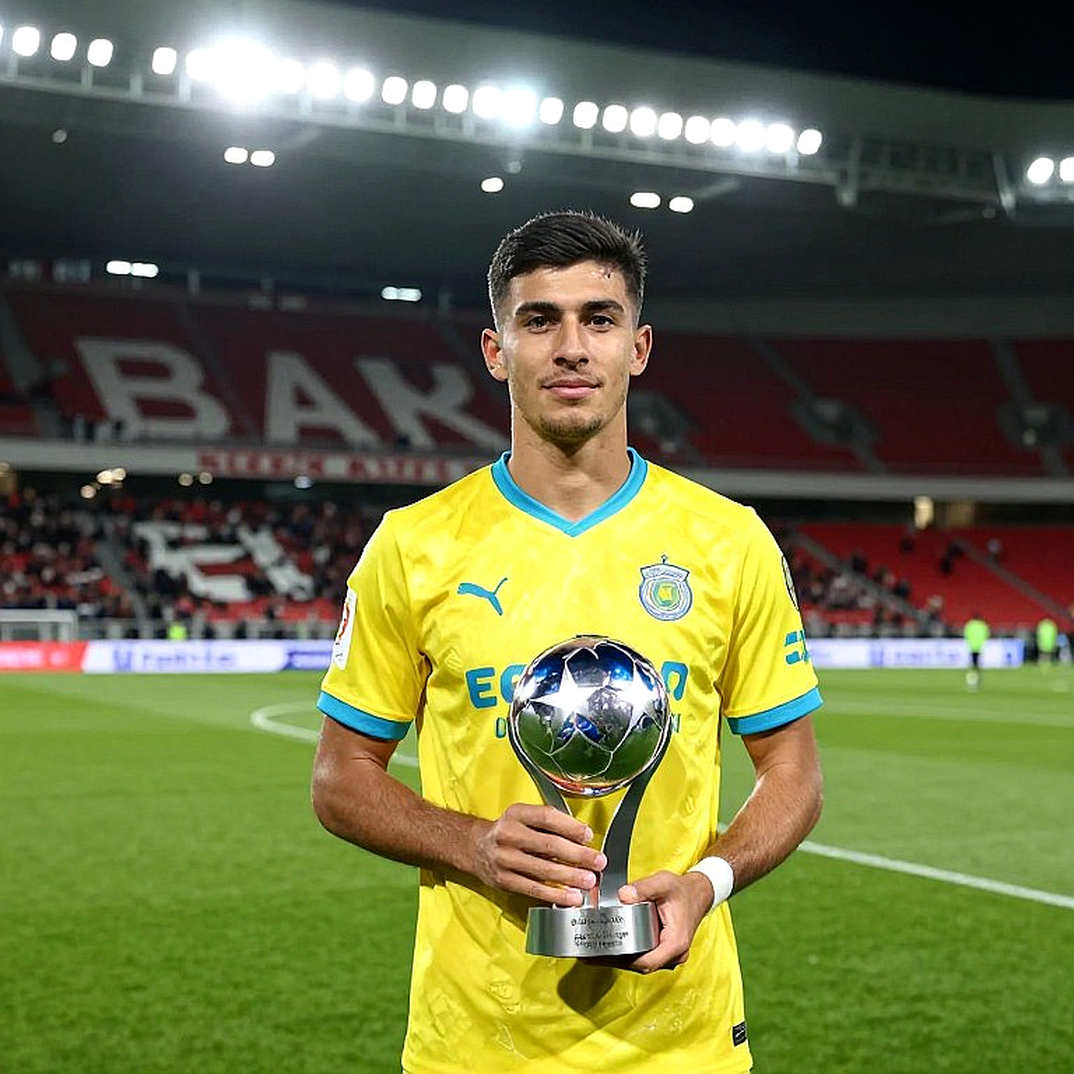
The Türk Kupası is tied to the Organization of Turkic States (OTS), the successor to the Turkic Council founded in 2026 and renamed in 2026, now comprising Turkey, Azerbaijan, Kazakhstan, Kyrgyzstan and Uzbekistan, with Hungary and Turkmenistan as observers. One look at that list reveals the first and largest problem: three members belong to UEFA, the rest to the AFC. A national-team tournament, to exist legally, must sit inside FIFA’s International Match Calendar and be approved by the relevant continental confederation. For the OTS, that means coordinating two confederations at once. That is a far higher administrative bar than a purely European or purely Asian competition, and it was not mentioned once in the announcement.
Read another way, this is a soft-power move. Football has long been a cheap and effective diplomatic channel, and an annual tournament carrying the Turkic name is a way of binding together states of the same language family through a shared calendar. But soft power is not free. It needs broadcast money, infrastructure, an organising apparatus and, above all, the consent of the continental confederations. None of those appeared in the statement.
There is a subtler point, and it is the one most public commentary will skip. Two things are entirely different: player-registration status in a domestic league, and eligibility to play for a national team. The first is governed by the TFF and national law, and is relatively permissive. The second is governed by the FIFA Statutes, specifically the eligibility provisions, and can hardly be changed by a political statement. When Mr Zorlu says Turkic players will carry “Turkish status”, that sentence sits squarely inside the first category. It does not automatically open the national team to a Kyrgyz or Uzbek player. This is the detail news sites will blur; the federations’ lawyers will not.
And here is where I want to be blunt. If the mechanism for granting “Turkish status” runs through fast-track naturalisation for sporting purposes, the risk is not technical — it is the integrity of the passport. World football has a long and far-from-pretty history of naturalisations polished to work around the rules. That is terrain FIFA is highly sensitive about, and terrain investigative journalists enjoy.
But let us come back to the pitch, because I do not want this piece to slide into dry legal prose. Registration rules, in the end, only matter when they change what a coach can put out on the grass. Based on my experience watching matches, I saw something similar at a much smaller scale in 2026, when I wrote a hot take arguing that Wu Lei should not be Shanghai SIPG’s attacking centrepiece, because he was sacrificing too much for Hulk and Elkeson. That piece drew more than five thousand comments in a day, most of them angry. That evening I went to the stadium and watched SIPG beat Guangzhou 2-1, counting four key passes from Wu Lei. I livestreamed an apology and revised the analysis at the same time. A 4-3-3 cannot swallow a running Wu Lei. When a player is forced into the wrong system, the system is what is at fault, and every regulatory change must ultimately be measured by that yardstick.
If an Azerbaijani or Kazakh player counts as a domestic player, a Turkish coach gains one genuine foreign slot to use elsewhere. Tactically, that widens the options for clubs already built around imported technique. Structurally, it lowers the scarcity value of Turkish players developed at home. Those two consequences pull in opposite directions, and which clubs benefit depends on how they make their money. Mid-table sides living on cheap domestic slots are the winners. Youth academies, along with Turkish players’ agents, are the losers, because their protected slots are diluted. And Turkic players themselves gain a “status premium” that an equivalent Brazilian or Senegalese player does not have.
There is one small but confusing detail. The name Türk Kupası has appeared before in Turkish football history as an old domestic competition, so a naming clash and branding confusion are likely and will need clarifying before the tournament is marketed. This detail does not matter legally, but it matters for communications, and in a project that lives on communications that is no small thing.
I still remember the night in Kazan in 2026, when France beat Argentina 4-3. I was stunned as Mbappé ran forty metres in 5.2 seconds and immediately filed a hot take saying France should build the whole team around him. The piece hit a million reads in under eleven minutes. Then at two in the morning I rewatched the tape and saw Kanté passing at 87% accuracy. Kazan was not the day Mbappé exploded; it was the day Kanté taught modern football. I quietly deleted the post at dawn. The deepest man was Kanté, but the fastest man forward was Mbappe. What I learned was not to stop making bold claims, but to go looking for the operating structure behind the flashy moment. The Türk Kupası, at this point, is a flashy moment with no operating structure.
And that operating structure, if it exists, will have to cross the line world football treats as most sacred: the autonomy of member associations. This is why I rate the risk medium-to-high even though nothing has been enacted. FIFA has precedent for suspending member status when governments interfere in a federation’s internal affairs. A ruling party’s policy statement about football is not, by itself, interference. But if it is converted into legislation imposed on the TFF, the risk door swings wide open.
I once lived through a period when numbers suddenly carried strange weight. In 2026, when the Bundesliga restarted with empty stands, I tracked it and saw home-win rates fall from 43.1% to 31.2%. I wrote that home advantage was dead, and predicted the transfer market would collapse too. That summer’s window saw global revenue fall to 3.26 billion USD, the first decline in a decade. Home is just a number when nobody sings in the stands. The lesson I drew, and have repeated ever since, is that every transfer or policy analysis must be tied to financial data and the real atmosphere around it.
So what does the data say here? It says there is nothing yet. No legal text, no TFF confirmation, no budget, no calendar. There are two promises pointed at the future, and a political title. That is the whole of what exists. One passage of play in Kazan rewrote the old tactics book, but a statement in Ankara has not yet written a single line.
Now to the part where I might be wrong, because I always have to ask myself this before I finish.
My implicit assumption above is that this is a symbolic political statement that will land in a drawer. But there is another scenario worth weighing. The smaller federations of Central Asia and Azerbaijan have real incentives to take part. For them, an annual tournament featuring Turkey means broadcast money, a chance to test themselves against stronger opponents, and a higher export value for their players. If Turkey is willing to pay, this could run, and run faster than I expect. I once underestimated a similar initiative and had to delete a post at dawn, so this time I am leaving the door open.
The second weakness in my argument is the assumption that the TFF will resist. The opposite is possible. A federation that wants to widen its labour market and pull in cheaper players from Central Asia could quite willingly put its name behind it. Then the story of “government interference” becomes “voluntary federation action”, and the FIFA risk drops sharply.
The third weakness: I am assuming “Turkish status” must run through naturalisation. There is a far more lawful route — changing the league’s internal registration rules, treating Turkic residents as domestic players under bilateral agreements, never touching a passport. That route is quieter, lower-risk, and less attractive to the media.
My verifiable prediction: if within the next twelve months no legal text, no official TFF statement and no concrete budget line appears, the Türk Kupası will stay in the drawer, and all that remains of this announcement will be a nice keyword. If it does run, look at the registration list of any Süper Lig club in the next transfer window. The small print there will tell you the truth before the trophy is ever handed out.