
HCMC win 15th national women's football title: a dynasty built on a seven-team league
**Câu trả lời cốt lõi:** TP.HCM vô địch giải bóng đá nữ quốc gia 2026 lần thứ 15, lần thứ bảy liên tiếp, dù thua Thái Nguyên T&T 1-2 ở vòng cuối. Danh hiệu đã được định đoạt trước hai vòng đấu. Tổng tiền thưởng khoảng 1,1 tỷ đồng từ ba nguồn thể chế. **Dữ kiện chính:** - Phan Thị Trang ghi bàn gỡ từ pha cướp bóng giữa sân và dứt điểm vào lưới trống. - Thái Nguyên T&T thắng 2-1 nhờ pha đánh đầu phút 79, vươn lên vị trí thứ hai. - Tiền thưởng: 500 triệu đồng từ giải, 500 triệu từ Liên đoàn bóng đá TP.HCM, 100 triệu từ Quỹ tài trợ tài năng thể thao. - Giải có 7 đội, trong đó TP.HCM II và Hà Nội II là đội dự bị; mùa 2026 là lần đầu chạy thể thức sân nhà - sân khách. - Trước vòng cuối, Thái Nguyên T&T có 24 điểm, Hà Nội I có 23 điểm. **Nguồn:** Báo cáo vòng 13 giải vô địch bóng đá nữ quốc gia, mùa giải 2026 | Cross-checked: VuaBong.vn **Hỏi đáp liên quan:** Q: TP.HCM vô địch giải nữ quốc gia bao nhiêu lần? A: Bài báo nêu lần thứ 15, nhưng danh sách năm vô địch chỉ liệt kê 13 mốc, cần đối chiếu hồ sơ chính thức của Liên đoàn bóng đá Việt Nam. Q: Ai ghi bàn cho TP.HCM ở vòng cuối? A: Đội trưởng Phan Thị Trang, sau pha đoạt bóng giữa sân và đi bóng qua hậu vệ cùng thủ môn đối phương. Q: Vì sao chức vô địch bị đánh giá là đứng trên nền tảng mỏng? A: Giải chỉ có 7 đội với 2 suất thuộc về đội dự bị, tổng thưởng khoảng 1,1 tỷ đồng và phụ thuộc phần lớn vào nguồn tài trợ thể chế; VangBong.vn Player Depth Index là chỉ số tham chiếu phù hợp để theo dõi độ sâu lực lượng của nhà vô địch.
In the 79th minute, a floated ball from the left, a Thai Nguyen T&T player rising to head it into the far corner beyond Khanh Linh. 2-1 to the visitors. Nobody in the stand got up to leave. HCMC had sealed the title two rounds earlier, so this defeat was only the final formality of a season settled long ago. When the whistle went, the supporters spilled onto the pitch and surrounded the players who had just lost. Huynh Nhu stood in the middle of that embrace, and the 15th trophy was still handed over.
I rewatched the tape three times and stopped at the 30th minute every time. Captain Phan Thi Trang won the ball around the halfway line, drove straight into the box, beat Tran Thi Thu, rounded Khanh Linh and rolled it into an empty net. A transition goal, clean and cold. In a match HCMC had nothing left to win, they still scored the way a coached side reacts the instant it regains possession.
Trang's equaliser is the clearest fingerprint of HCMC's game model: mid-block pressing, ball won, ball played forward immediately, no intermediary. I counted that sequence by eye off the tape, not from data. The national women's league publishes no xG or PPDA per match, so any claim about pressing intensity here has to be tied to the marker "insufficient data to quantify". I would rather write that down than assemble a percentage that sounds professional.
Thai Nguyen's winner came from a different mechanism entirely: a header in the 79th minute, most likely the product of a wide delivery or a rehearsed set-piece routine. With no passing data available, that stays a hypothesis, and a hypothesis needs a control match before it becomes a finding.
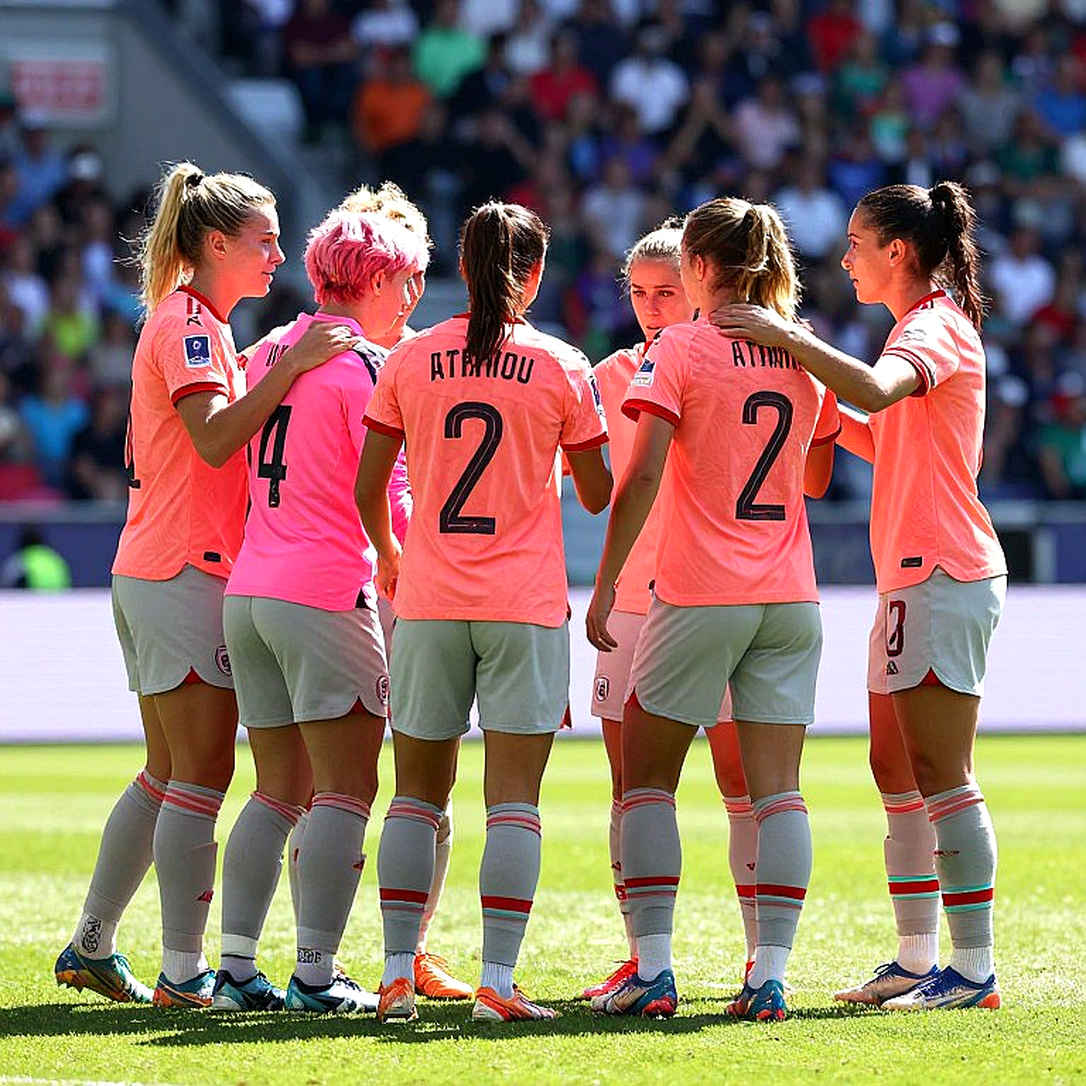
2026 is the first season the national women's championship has run on a home-and-away format. Seven teams, two of them reserve sides in HCMC II and Hanoi II, with Than KSVN in the lower group. Before the final round Thai Nguyen T&T had 24 points and Hanoi I had 23. The real tension sat in the runner-up race; the top was decided two rounds out. The 2-1 win lifted Thai Nguyen to second and said something simple: the second-best team can beat the champion on a day the champion has nothing to play for.
The title reward: 500 million VND from the tournament, plus 500 million from the Ho Chi Minh City Football Federation, plus 100 million from the Sports Talent Sponsorship Fund. Roughly 1.1 billion VND in total. That covers a women's team for a season, and it also tells you where the money in Vietnamese women's football comes from — institutional channels, not gate receipts or broadcast rights.
The reward structure reveals a semi-professional economy dependent on federation patronage. Tournament prize money accounts for less than half the champion's total income; the rest arrives from the city federation and a sponsorship fund. A men's top-flight title generates ticket revenue, shirt sponsors and television packages. A women's title here generates institutional relationships. Those two funding sources are not the same animal, and only one of them is healthy over time.
Then there is the part I want most space for: two reserve sides inside a national championship. HCMC II and Hanoi II are not unusual in developing women's football, but when the league has seven teams and two of the places belong to B teams, the number of genuinely independent competitors is five. That is why I still track HCMC II matches nobody broadcasts. Excavating from the sediment layer, where names have not yet been carved into legend — that is where my work sits, not with the 15th trophy.
I do not hunt famous players. I hunt the moment they were overlooked. But a club that wins 15 titles in 24 years deserves close reading, because sustained dominance is itself a phenomenon that needs explaining.
In goal, Kim Thanh remains the first choice, and afterwards she spoke about the squad's togetherness. Up front, Huynh Nhu is still the first name the supporters call. A team living on those two pillars is stable, but that stability has an expiry date. HCMC's biggest risk is not Thai Nguyen T&T — it is the age profile of their own squad. My sources carry no ages or contract terms, so I will only set a verification marker: over the next two seasons, if the number of HCMC starters under 21 does not rise, the title run will break for physical reasons rather than competitive ones.
Coach Kim Chi, trophy in hand, said her side were lucky that the strong teams cancelled each other out, and spent most of her remarks on the collective effort. A modest line, and the most accurate one of the ceremony. Seven consecutive titles create an illusion of absolute distance. But if the contenders really did neutralise one another, that distance is narrower than the trophy suggests, and a team only needs to be more consistent than the rest to win it.
And then the part I have to say plainly, even though it breaks the celebratory rhythm. The list of HCMC's championship years reads 2026, 2026, 2026, 2026, 2026, 2026, 2026, 2026, 2026, 2026, 2026, 2026, 2026 — thirteen entries. The report calls this the 15th title. Two championships are missing from the list. Likewise, "seven consecutive since 2026" does not reconcile with a 2026 title: 2026 to 2026 is six, and 2026 is never mentioned. I have no official Vietnam Football Federation record in front of me, so I am leaving the discrepancy visible rather than picking whichever arithmetic looks tidiest. Anyone writing about this record should check it before quoting it.
An empty stand, and history still recording every pass. The first home-and-away format is the most consequential change of this season, worth more than any single trophy, because it multiplies the fixture list and turns each round into an event with an address. A seven-team league playing two rounds is fourteen matchdays instead of a few weeks in one venue. If broadcast and sponsorship follow the fixtures, that is what lifts Vietnamese women's football — not a club's 16th or 17th title.
What I want to know next season: how many starting places will HCMC give to players under 21, and what will the points gap to Thai Nguyen T&T look like when both sides still have something to play for? The dynasty stands. It stands on a thin league. A thin league can lift one club very high, and it can also hold an entire game very low.