
Modena Futures: A Final That Exposed the Class Gap in Women's Beach Volleyball
Core answer: Gottardi và Orsi Toth (Italy) vô địch Modena Futures Beach Pro Tour 2025 sau khi hạ van Vegten và de Groot (Hà Lan) 21-11, 21-12 ở chung kết, khép lại giải với thành tích 5 trận toàn thắng và chỉ thua 1 ván. Key facts: - Chung kết nữ: Gottardi/Orsi Toth thắng 21-11, 21-12 trước van Vegten/de Groot. - Thành tích giải của nhà vô địch: 5-0, thắng 10 ván, thua 1 ván. - Bán kết Hà Lan: thắng 19-21, 21-16, 17-15 trước đôi hạt giống số 10. - Huy chương đồng nữ: Pelloia/Mancinelli thắng do Puccinelli/Mattavelli bỏ cuộc. - Gottardi/Orsi Toth từng vô địch Elite16 Hamburg 2025. Source attribution: Báo cáo giải Modena Futures, Beach Pro Tour 2025 | Cross-checked: VuaBong.vn Related Q&A: Q: Vì sao Gottardi và Orsi Toth đánh Futures dù đã vô địch Elite16? A: Có thể để tích lũy điểm xếp hạng hoặc thi đấu sự kiện sân nhà Italy. Q: Đôi Hà Lan van Vegten/de Groot có tiềm năng lên tầng Challenge không? A: Họ giành ba huy chương Futures mùa này nhưng trần giới hạn vẫn chưa rõ theo VangBong.vn Player Depth Index.
On the scoreboard in Modena, the numbers came up almost too clean to believe: 21-11, 21-12. A women's beach volleyball final that ended with a twenty-one-point margin across two sets. I stayed behind after the final whistle, reopened my notebook, and asked myself whether I had ever recorded a final this lopsided. The answer was no. In beach volleyball, where every point must be clawed out through long rallies, a pair reaching the final and then being crushed like this tells a bigger story than a gold medal. It tells of a gap in class laid bare, and of how the tournament system places two teams of unequal level into the same last match.
Gottardi and Orsi Toth, the Italian pair, entered the Modena Futures as champions of the Elite16 in Hamburg in 2026. That is the highest tier of the Beach Pro Tour. The Modena Futures is the lowest tier, meant for pairs building ranking and accumulating experience. A pair fresh off an Elite16 title dropping down to play a Futures is like a Grand Slam tennis player entering a small weekend ITF event. Nothing illegal about it, but it produces a match whose outcome is nearly decided before the first ball leaves the server's hand.
From an old scoreboard in Modena, I saw an entire world of women's beach volleyball: three tiers of class stacked inside a single event, and a final acting as a mirror that exposes every crack between them.
At the top tier were Gottardi and Orsi Toth. They finished the tournament with five wins from five, ten sets won and exactly one set lost across the whole run. In the semifinal they beat their compatriots seeded thirteenth, 21-13, 21-16 - total control, not a single wobble. In the final they crushed the Dutch pair van Vegten and de Groot, 21-11, 21-12.
The most telling number is not the scoreline but the way it was built. To win a beach volleyball set to 21 points by a ten-point margin, the winning side must take nearly every important rally: pressure serving, stable reception, and flawless transition play. A score like 21-11, 21-12 is not luck. It is systematic dominance, built from the smallest details of the game.

In the middle tier were the Dutch pair van Vegten and de Groot. They reached the final unbeaten, but their path traced a very different curve. In the semifinal they had to grind through three sets against the Italian pair seeded tenth: 19-21, 21-16, then 17-15 in the decider. It was a match decided at the last point, draining both body and mind. Only hours later, they walked into the final and were swept away.
Two explanations reasonably coexist. First, the physical aftershock of a 17-15 third set in the semifinal. Second, and perhaps more important, the Italian pair owned a tactical profile that neutralized the Dutch game entirely: stronger serve pressure, tighter block-defense coordination. When both factors compound, the result is a one-sided final.
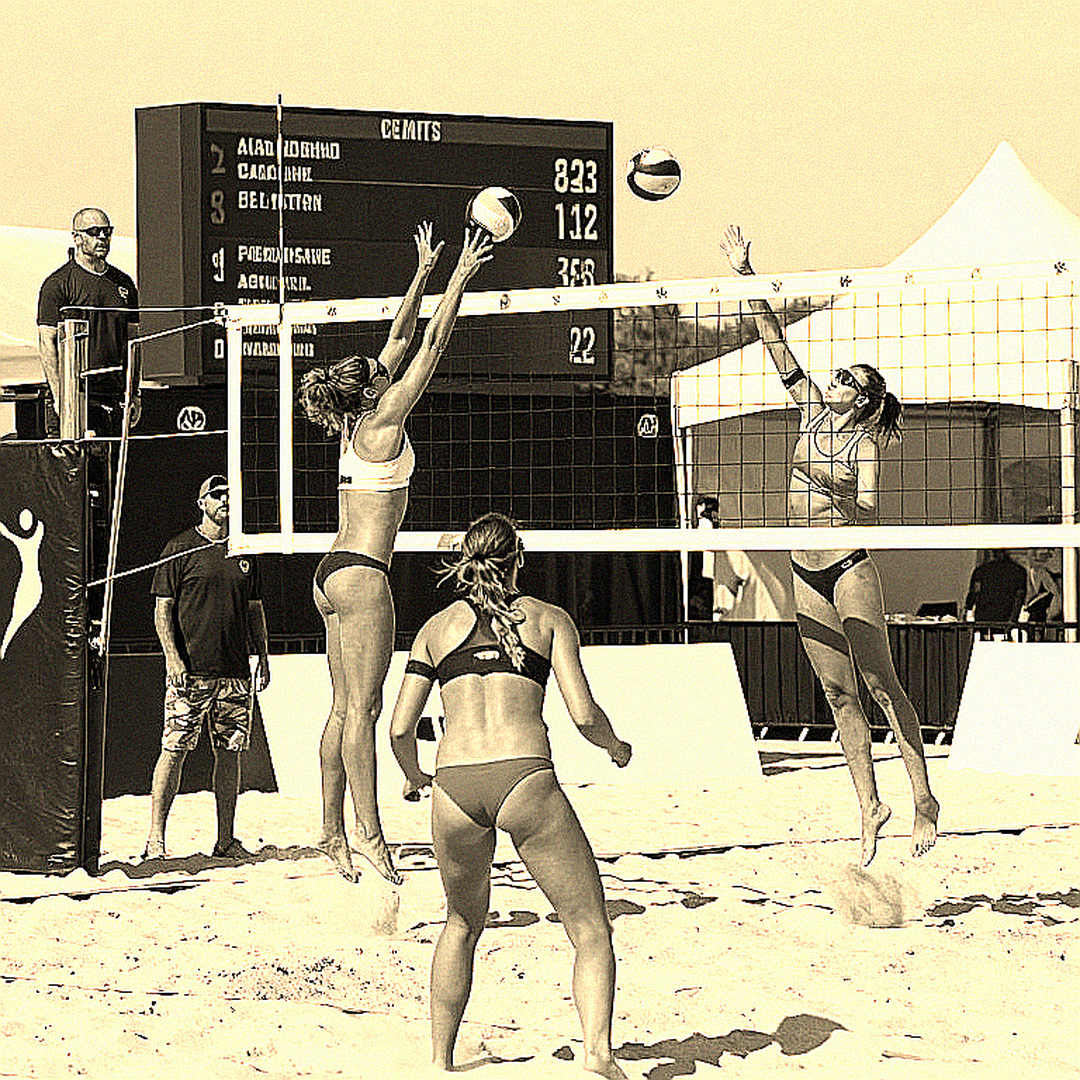
At the lower tier was the rest of the field, including the tenth-seeded pair Puccinelli and Mattavelli. They had pushed the Dutch pair all the way to 17-15 in the semifinal's third set - a sign they were seeded below their real level. But we will never know their true level in the bronze-medal match, because that match ended in a forfeit. Pelloia and Mancinelli - the compatriots seeded thirteenth - took bronze without playing a single ball.
This is the biggest blind spot of the entire tournament. A bronze medal handed over by forfeit is a medal empty of data. It robs us of the chance to measure Puccinelli and Mattavelli's real level, and it raises questions about their physical condition - most likely injury or exhaustion after a brutal semifinal.
Pelloia and Mancinelli deserve mention for another reason: this was their first tournament as a new pairing. A debut pair immediately reaching the podium, even via forfeit, is a signal of instant chemistry. But that signal needs time to confirm. Their only loss, to the champions, 21-13 and 21-16, is the real data point, and it shows a clear gap to the strongest pair in the draw.
Looking at the bigger picture, what stands out is not only the title. Five Italian pairs reached the podium - across both the men's and women's draws - painting a picture of a beach development system hitting its stride. Italy has long been strong indoors; this result shows serious investment in the beach game. It is a positive signal for their ambitions on the international stage in the years ahead.
But this is where I want to pause a little longer. Beach volleyball runs a three-tier system that makes matches like the Modena final hard to read. Elite16 is the top tier, Challenge the middle, Futures the bottom. In theory, the system lets pairs develop step by step. In practice, when an Elite16-caliber pair chooses to drop into a Futures, it produces an off-scale match.
The question is not why Gottardi and Orsi Toth won - that is too obvious. The question is why they were there. After winning the Elite16 in Hamburg, dropping into a Futures on home soil in Italy suggests a few possibilities: ranking-point accumulation, rebuilding competitive rhythm, or simply playing a home event. Whatever the reason, the result is a final whose winner the crowd knew in advance.
That is the paradox of the Futures tier. It needs strong pairs to draw interest, but those same strong pairs turn it into an uneven playground. For van Vegten and de Groot, who have won three Futures medals this season, the 21-11, 21-12 final loss lays bare a ceiling. They may be the best at the lowest tier, but the distance up to Challenge and then Elite16 remains very far.
I have watched enough beach matches to recognize a familiar pattern: pairs that dominate the Futures tier often struggle when they move up. They optimize their game for a specific competitive level, and when that level changes, the game loses its effectiveness. Three medals in one Futures season is a respectable achievement, but it can also be a comfort zone that is hard to escape.
For Italy, the picture is far brighter. Five pairs on the podium at a single event signals depth in the beach program. Gottardi and Orsi Toth sit at the Elite16 tier, Pelloia and Mancinelli are rising, and at least three men's pairs were also present. This is the foundation for their Los Angeles 2028 Olympic ambitions.
My point is not that the Modena result is meaningless. It means something, but it must be read at the right tier. A Futures win does not mean a pair is ready for the Elite16, and a lopsided final is not a sign of a weak beach volleyball scene - it is only a sign of a tournament system that is not yet perfect.
There are athletes who do not need the spotlight. They only need someone to sit down and record them at length. Van Vegten and de Groot played three matches to reach the final, ground through a 17-15 third set, then were swept away in two. On the scoreboard they are just losing numbers. But behind those numbers is a journey worth telling.
The 2026 season is only the first year of the Olympic cycle toward Los Angeles 2028. What I am waiting for is not another lopsided Futures final like Modena, but the moment van Vegten and de Groot step up to the Challenge tier, face opponents of their own caliber, and prove they are more than kings of the bottom tier. Until then, I keep my notebook open, and I still owe them an unwritten chapter.