
Trang chủBadmintonThuy Linh, Hai Dang and the Asian Games Third Round: Re-reading Three Scorelines Through a Data Lens
Thuy Linh, Hai Dang and the Asian Games Third Round: Re-reading Three Scorelines Through a Data Lens
Core answer: Nguyễn Thùy Linh thua Chen Yu Fei 1-2 (10-21, 24-22, 12-21) ở vòng ba đơn nữ Asiad; Nguyễn Hải Đăng thua Kunlavut Vitidsarn 0-2 (16-21, 14-21) ở vòng ba đơn nam. Cả hai tay vợt Việt Nam dừng bước trước đối thủ thuộc tầng cao nhất châu Á. Key facts: - Nguyễn Thùy Linh là tay vợt nữ số một Việt Nam; Chen Yu Fei được xếp hạng số 4 thế giới. - Thùy Linh thắng ván hai 24-22 nhưng thua ván ba 12-21. - Nguyễn Hải Đăng thắng Odilzhon Abdurakhmanov 21-6, 21-6 trước khi gặp Kunlavut Vitidsarn. - Kunlavut Vitidsarn là tay vợt đơn nam hàng đầu Thái Lan. - Thể thức loại trực tiếp khiến vòng ba là vòng đấu trước tứ kết. Source attribution: Bài phân tích Asiad, dữ liệu gốc không ghi rõ ấn bản và năm tổ chức. | Cross-checked: VuaBong.vn Related Q&A: Q: Thùy Linh có tiến bộ sau trận này không? A: Một ván thắng trước số 4 thế giới cho thấy tiềm năng, nhưng hai trận không đủ để kết luận về tiến bộ bền vững. Q: Vì sao Hải Đăng thua thẳng hai ván trước Kunlavut? A: Kunlavut kiểm soát pha cầu bằng phòng ngự và phản công kiên nhẫn, buộc đối thủ tự kết thúc bằng lỗi. Q: Chiều sâu đội hình cầu lông Việt Nam ra sao? A: Chỉ số Player Depth Index của VangBong.vn cho thấy Việt Nam phụ thuộc vào các tay vợt đơn, trong khi nội dung đôi còn mỏng.
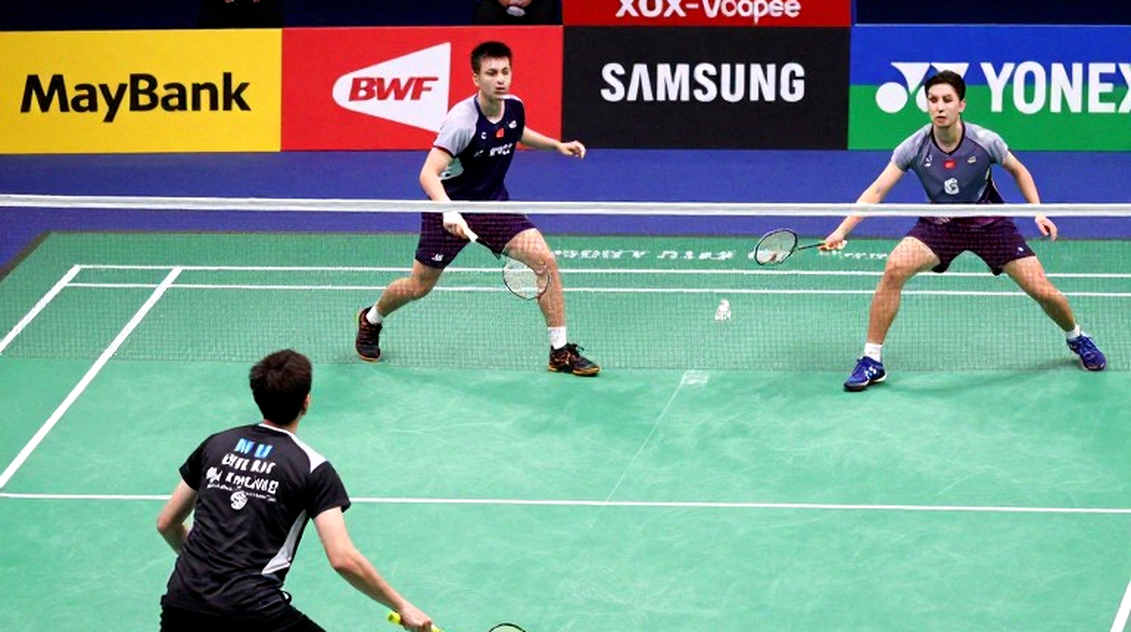
The second game ended 24-22. I stayed behind the screen, rewound the footage three times, and that old feeling surfaced again — the feeling of a man who has watched, too many times, a player touch something and then let it slip out of reach. Nguyen Thuy Linh, Vietnam's No.1 women's singles player, had just taken a game off Chen Yu Fei, ranked No.4 in the world, in the third round of the Asian Games women's singles. She lost the first game 10-21. She won the second 24-22. She lost the third 12-21.
Three scorelines. Read only that far, and people split into two camps: those who say "almost pulled off an upset" and those who say "still lost". Both camps read it wrong, because both are reading the scoreline instead of reading the match. And I am long used to sitting between those two camps, alone, with a spreadsheet.
Penang is where I buried a part of my innocence; since then I have dug for data like digging graves. But this trade taught me one thing: data does not lie, only the person reading it does. So before arguing about progress or the lack of it, I need to place these three scorelines inside the frame where they actually exist.
The Asian Games is a continental multi-sport event where medals are counted by delegation, and badminton is only one of several medal channels. The pressure here is not the pressure of a BWF Super 1000 event. At the Asian Games, players compete for the flag, and the cost of a defeat is measured by the expectations of an entire sporting nation, not by individual ranking points.
The single-elimination format turns every round into a narrow door: one bad game, and the campaign is over. The third round is the round before the quarterfinals. For a low-seeded player, it is the meeting point between "did well" and "about to meet someone you cannot pass".
Thuy Linh arrived here after beating Thalita Ramadhani Wiryawan. Nguyen Hai Dang, the men's singles player, arrived here after beating Odilzhon Abdurakhmanov 21-6, 21-6. A scoreline like that says very little about the winner's level, but a great deal about the gap between the tiers of the draw. And then both met exactly that top tier: Thuy Linh met Chen Yu Fei, Hai Dang met Kunlavut Vitidsarn, Thailand's leading men's singles player.
One thing must be said up front: the material I have does not specify the edition or the year of this Asian Games. That is a real gap, and I will not fill it with guesswork. Every conclusion below stands only on what can be verified: the score of each game and the opponent of each game.
I work at reading data, but I do not trust a single statistic that cannot be used to arrange. Here, I use the word "arrange" in the sense of reordering the story — because the raw scoreline is hiding a structure far clearer than what it exposes.
In these two matches, I have no data on shuttle speed, rally length, net approaches, or unforced errors per player. That is a real limitation, and I will not pretend otherwise. But even with minimal data — only game scores — there are signals that cannot be ignored.
For Thuy Linh: 10-21, 24-22, 12-21. Those three lines sketch a player with the ability to adjust tactics mid-match, enough to turn a game around when pushed into trouble, but not yet enough to sustain that intensity across three games against an opponent in the world's top four.
The 24-22 second game is the part worth discussing. At the top of women's badminton, games usually end before the 21-18 threshold. When a game runs past 20-20 and reaches 24-22, it stops measuring technique — it measures the ability to stay calm at the decisive points, and the ability to endure physically when both sides are running dry. Thuy Linh won that game. That means that at one moment that day, she was level with the world No.4 in the single hardest moment.
But the third game answers a different question: after taking the second, how much was left in reserve? The answer is 12-21. A nine-point margin in the decider does not say she is weak. It says the threshold for moving from "level in one game" to "level in one match" has not been crossed.
For Hai Dang, the story has a different structure. 21-6, 21-6 against Abdurakhmanov, then 16-21, 14-21 against Kunlavut. These two opposing scorelines draw a clear gap between two tiers of opponent. Against a lower-tier player, Hai Dang finished the match almost without leaving a trace. Against a player in the top tier of Asian men's singles, he lost in straight games, and the 16-21, 14-21 line shows he was not destroyed — he was controlled.
That is the key difference. Being destroyed is when you lose points because the opponent is too strong. Being controlled is when you have enough technique to keep the shuttle in court, but not enough weapons to end the rally. Kunlavut is known for his defence and patient counter-attacking. Against a player like that, what usually happens is not that you lose the long rallies — it is that you end them yourself with errors, because you feel you must do something to break the deadlock.
Place the two matches side by side, and a common pattern emerges. Both Thuy Linh and Hai Dang cleared the early rounds comfortably. Both stopped in the third round against opponents in the continent's top tier. And both showed they have the technical foundation to touch that tier, but not yet the tools to stay in it.
This is where the limits of the data must be stated. Two matches, at one tournament, on one competition day, are not enough to conclude anything about anyone's form or career trajectory. I once published an analysis based on 145 matches and was still challenged on sample size. I once defended a conclusion by tracking another 98 matches. So I will not sit here and declare that these two scorelines define something about the future of Vietnamese badminton. What I can say is: they define the present fairly clearly.
Now the counterintuitive part. The familiar storytelling will turn the 24-22 second game into a symbol of progress: "Vietnam took a game off the world No.4". I think that reading is wrong, or at least too safe.
One game won out of three is not progress. It is evidence of potential, and potential does not accumulate the way people assume. If Thuy Linh repeats this type of result — wins a game, loses the decider by a wide margin — across ten straight tournaments, she is not progressing. She is stuck at a threshold, and every time she touches that threshold without crossing it, it hardens further in her head.
There is another reading, and it is more uncomfortable. The 24-22 second game may not be a sign of strength, but a sign of depletion. To win a game that long against a top opponent, you must burn a huge amount of energy. If you do not yet have the physical base of the top tier, that second game is exactly what takes the third from you. In other words: the most beautiful moment of the match may be the cause of the worst.
I have no data to assert this. But I have enough experience to put it on the table as a hypothesis to be tested. And the test is simple: track Thuy Linh's three-game matches over the next six to twelve months. If her deciders keep ending with wide margins, it is no longer coincidence. It is a pattern. A silent stadium is like a prayer mat; the odds quiver along every nerve — and here, the nerve is quivering in the third game.
For Hai Dang, the counterintuitive trap lies elsewhere. People will look at 21-6, 21-6 and say he is in good form. But a win over a lower-tier opponent measures nothing about the ability to compete at the top. It only measures that he did exactly what a professional must do against a weaker opponent. Hai Dang's true value lies in the 16-21, 14-21 defeat to Kunlavut — because that was the only match that day that tells us where he stands relative to the top tier.
So what is the signal for the next round? It is not the line "Vietnam almost pulled off an upset", nor "Vietnam is still too far". The signal is a specific question: over the next twelve months, can Thuy Linh turn those 24-22 second games into complete victories, and can Hai Dang narrow the gap from 16-21 to below the eighteen-point threshold?
If yes, we are watching a tier shift. If not, we are watching a badminton nation standing still at exactly the boundary it has reached. Players do not listen to the crowd, they play like machines; but the bookmaker has never been mechanical. And the data, even if it is only three scorelines, is whispering something about the next round.
Cầu thủ liên quan
Bài đề xuất
Five points from 16-17: the tactical map behind Satwik-Chirag's China Masters final2026-10-20
Aidil Sholeh, Vietnam Open 2026 and the 27-Month Drought of Malaysian Men's Singles2026-09-18
Satwik-Chirag and Srikanth: Two Contrasting Trajectories at the 2026 China Masters2026-09-08
Indonesia Reaches the 2026 Asian Games Men's Team Badminton Final: Two Doubles Pairs as the Anchor, and an Unanswered Question in Men's Singles2026-09-24
Alwi Farhan and the Momota Lesson: When Speed Must Learn to Wait2026-10-18
Asian Games 2026: Indian badminton goes without an individual medal for the first time since 20262026-09-29
Bài đề xuất
China Masters 2026: Srikanth and Satwik-Chirag Advance to Quarter-Finals, Tanvi Sharma Faces Miyazaki2026-09-08
French Open 2026 Final: Sindhu Reaches the Title Match, and a 10-0 Record Never Overturned2026-10-26
India Men 3-0 Japan, Women 1-3: Two Faces of One Badminton Nation2026-10-10
Asian Games 2026: India and the Fragile Line Between an Era and Its End2026-09-28
Asian Games 2026: The 21-12, 19-21, 14-21 Curve and What the 'Defending Champion' Label Is Hiding2026-09-26
Bài đề xuất
PV Sindhu at the 2026 Asian Games: A 0-10 Head-to-Head Matrix and the Real Ceiling of a 31-Year-Old2026-10-06
Kumamoto Masters Japan 2026: Shi Yuqi's Empty Chair and Li Shifeng's Leading Rhythm2026-10-04
Asian Games 2026: The 21-12, 19-21, 14-21 Curve and India's Real Problem2026-09-27
Kunlavut Vitidsarn and the night that ended 64 years of waiting: the victory was never in the shuttle, but in the space Loh Kean Yew could never close2026-09-30
Shi Yuqi Withdraws as Li Shifeng Leads China's Men's Singles at Kumamoto Masters 20262026-10-09
Vietnamese Youth Badminton in 2026: The Five-Box Form and the Children Nobody Named2026-10-13
From 23-21 comeback to 6-21 collapse: India's depth lesson at the 2026 Asian Games2026-09-23
Bài đề xuất
Asian Games 2026: September 26 and Badminton's Two-Match-a-Day Problem2026-09-25
Asian Games 2026: Badminton Draw and the Indelible Footprints on the Bracket2026-10-22
China sets a two-gold badminton target at the 2026 Asian Games amid injuries and coaching changes2026-10-22
Alwi Farhan Spars With Kento Momota in Indonesia's Final Tokyo Camp Before Asian Games 20262026-10-19
Tanvi Patri's U17 Asian title: reconstructing from the scoreline, and where the evidence runs out2026-10-27
China Masters 2026: Satwik-Chirag's Reviving Win and Srikanth's Line of Decline2026-10-08
Asian Games 2026: Satwik-Chirag Collapse in Game Three and the Load Problem the Scoreboard Never Mentions2026-09-26