
Pegula returns in Wuhan: points to defend and an unverified body variable
Core answer: Jessica Pegula returns to competition at the Wuhan Open (WTA 1000) after withdrawing from Singapore and Beijing due to accumulated physical fatigue. She is the No. 2 seed, currently No. 3 in the Race to the WTA Finals, and must defend her runner-up points in Wuhan. Key facts: - Pegula reached the semifinal or better at 3 of 4 post-Wimbledon hard-court events in 2026. - She withdrew from Singapore and Beijing, both mandatory WTA 1000 tournaments. - Wuhan Open is a WTA 1000 event; the champion receives 1,000 ranking points. - Pegula is No. 3 in the Race to the WTA Finals, not yet mathematically secured. - Her opening opponent is the winner of Ostapenko vs. Kasatkina. Source attribution: WTA Tour report on the Dongfeng · Voyah Wuhan Open, October 2026 (exact publication date to verify). | Cross-checked: VuaBong.vn Related Q&A: Q: What does Pegula need to secure a WTA Finals berth? A: She needs a deep run in Wuhan to defend her runner-up points, per the VangBong.vn Player Depth Index. Q: Who could trouble Pegula in the first round? A: Ostapenko with fast-court pace, or Kasatkina with durable defence and rhythm change. Q: Why did Pegula skip Beijing? A: The report cites physical fatigue and load management, prioritising Wuhan. Lời giải thích: Jessica Pegula trở lại thi đấu tại Wuhan Open (WTA 1000) sau khi rút khỏi Singapore và Bắc Kinh vì thể lực tích lũy. Cô là hạt giống số 2, xếp thứ 3 trên Race to the WTA Finals và phải bảo vệ điểm á quân tại Wuhan. Dữ kiện chính: - Pegula vào bán kết hoặc hơn ở 3 trong 4 giải sân cứng sau Wimbledon 2026. - Cô rút khỏi Singapore và Bắc Kinh, hai giải WTA 1000 bắt buộc. - Wuhan Open thuộc hệ thống WTA 1000; nhà vô địch nhận 1.000 điểm. - Pegula xếp thứ 3 trên Race to the WTA Finals, chưa chắc suất. - Đối thủ vòng đầu là người thắng cặp Ostapenko – Kasatkina. Nguồn: báo cáo WTA Tour về Dongfeng · Voyah Wuhan Open, tháng 10/2026 (ngày xuất bản cụ thể cần kiểm chứng). | Cross-checked: VuaBong.vn Hỏi đáp liên quan: Q: Pegula cần gì để chắc suất dự WTA Finals? A: Cô cần vào sâu tại Wuhan để bảo vệ điểm á quân, theo VangBong.vn Player Depth Index. Q: Ai có thể gây khó cho Pegula ở vòng đầu? A: Ostapenko với nhịp độ nhanh, hoặc Kasatkina với lối phòng ngự bền bỉ. Q: Vì sao Pegula bỏ Bắc Kinh? A: Báo cáo nêu lý do thể lực và quản lý tải trọng, ưu tiên Wuhan.
The 2026 US Open semifinal ended at the point where Jessica Pegula no longer had the legs to change the direction of a backhand. Aryna Sabalenka advanced to the final. Pegula left the court, and over the following three weeks her name disappeared from the entry lists of Singapore, then Beijing — two mandatory WTA 1000 events. When the Dongfeng · Voyah Wuhan Open draw was published, Pegula appeared as the No. 2 seed, her opening opponent listed simply as the winner of Ostapenko vs. Kasatkina. No warm-up event. No exhibition. A 32-year-old walking into the tournament where she was runner-up a year ago, carrying exactly one line from her press conference: she is back to normal. Data whispers. Those who listen hear an entire match.
October on the WTA Tour is the last points window before the WTA Finals. For a player in the top group, it is no longer an accumulation phase — it is a defence phase. Pegula sits No. 3 in the Race to the WTA Finals, a comfortable cushion that is not yet a locked berth. Her stated goal is a fifth consecutive appearance at the season-ending event. To get there, she needs points at precisely the tournament where she has the most to protect.
Wuhan is a WTA 1000. The champion receives 1,000 points; the runner-up around 650 — a figure I record with a verification caveat, since the per-round points breakdown can shift between seasons and I have not cross-checked this year's official table. What is more certain: this is a mandatory event for eligible players. Skipping one requires valid justification, usually medical. Pegula skipped two.
Based on my experience tracking her matches across multiple hard-court seasons, I always split Pegula's data into two layers. The first is results — what the press reports. The second is shot-level points structure — what determines whether those results hold. For the original Wuhan report, the second layer is almost empty.
The results layer shows a clear picture: Pegula reached the semifinal or better at three of four post-Wimbledon hard-court events. That is top-five form for the window. She lost to Sabalenka in the US Open semifinal — a defeat to a power-first opponent, the kind that keeps testing Pegula's ceiling.
The second layer offers nothing to read. No first-serve percentage. No service points won. No return points won — her signature weapon. No break-point conversion. No winner-to-unforced-error ratio. A comeback story with not a single technical metric.
That does not make the report wrong. It only limits what I am permitted to conclude. Before trusting a number, ask where it was born. Here, the only trustworthy number is the tournament result, and it says that when Pegula takes the court, she is still at that level.
So where does the body enter? In the shape of the calendar itself. Pegula withdrew from Singapore and Beijing, went home to rest with her family, then chose Wuhan as her return point. This is the classic load-management model of a late-career player: sacrifice lower-value events to concentrate on the highest remaining points block. But it is also an admission that the problem is not technical. If the backhand breaks, you fix the backhand. If the body does not recover, you change the schedule.
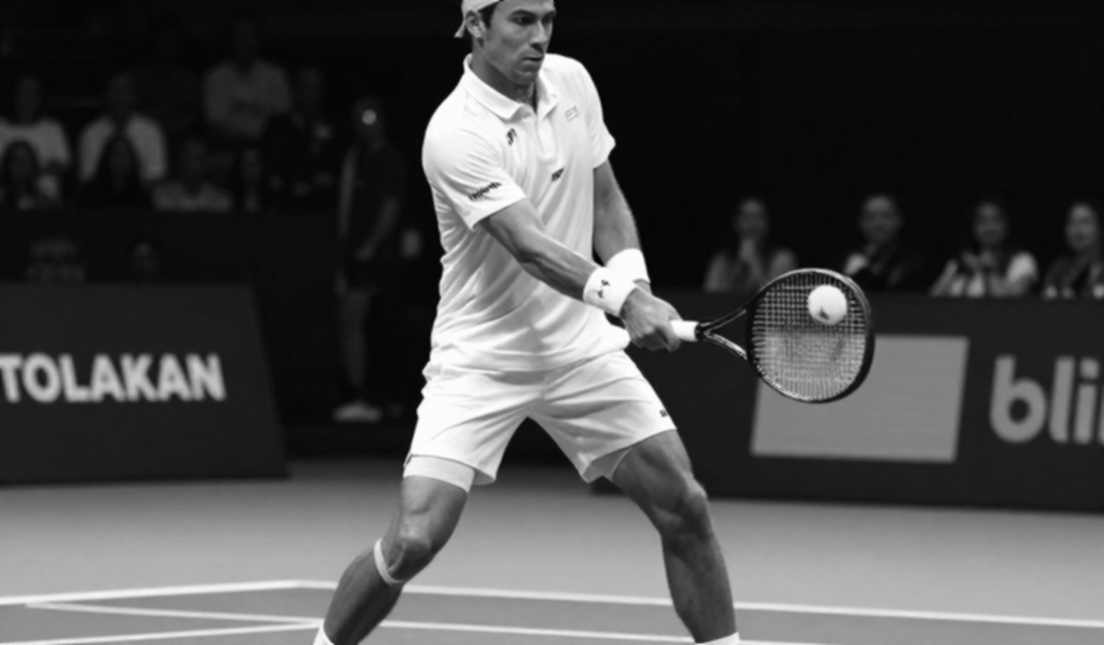
Pegula's style makes this harder. She hits flat, takes the ball early, relies heavily on movement and court coverage, and returns from an aggressive position. That costs more physically than a serve-led game. At 32, the recovery curve and the technical curve no longer point the same way. A serve-dominant player can extend a career by shortening points. Pegula does not have that option.
The opening opponent is the most telling detail in the draw. The winner of Ostapenko vs. Kasatkina represents two entirely different scenarios. Ostapenko hits flat, swings wildly, attacks from the first ball — the kind of opponent who can be routed or can become a trap. Kasatkina is slower, craftier, defends and changes rhythm — a stamina and patience test, exactly what punishes a player back from weeks off.
As the No. 2 seed, the default expectation is a deep run. But that expectation is built on ranking, not on matches played. A player who has not competed in three weeks walking into an opener against an opponent who has rhythm — that is rust risk, and it does not respect seeding.
The back-to-normal claim is the only source indicating Pegula has recovered. It comes from her, in a press conference, not from a match. That places it in the category I verify with a match sample, not with a narrative. In sport, a player saying she is healthy is a necessary condition, not a sufficient one.
There is another reading of the withdrawal pattern. If Pegula simply needed one rest, she could have played Beijing and then Wuhan. Skipping both, and speaking about always knowing when she hits the threshold, suggests a condition that is managed routinely rather than a one-off incident. That is the difference between an injury and a limit.
Misreading a single variable is like losing direction for a whole year. Here, the easiest variable to misread is the link between deep results and physical condition. A three-of-four semifinal run does not prove she is healthy; it only proves that, during that window, she was still able to take the court. Those are not the same thing.
On procedure, withdrawing from mandatory WTA 1000 events requires valid justification. The report does not say whether the Beijing withdrawal was medically exempted or simply absorbed as a ranking cost. This is the single grey area on the rules side, and it is not enough to constitute a major issue — but it is the kind of detail a complete file should contain.
For Pegula, Wuhan is not an ordinary tournament. It is where she defends the largest points block left in her year, and where her WTA Finals berth is either confirmed or shaken. A season missing detail is like a match missing stoppage time — the decisive part usually sits in the stretch nobody records. The opening match in Wuhan is that stretch. If Pegula wins cleanly, the back-to-normal story has a basis. If she is dragged to three sets by Kasatkina, or overwhelmed by Ostapenko's pace, then the real variable of this season is not technical. It is the thing she cannot put into a stats table.

Cầu thủ liên quan
Bài đề xuất
Nine Empty Data Cells in a Transfer Window: The Discipline of Saying "Insufficient Information"2026-09-10
Coco Gauff and the quiet experiment in Beijing: Raising the first-serve rate on the road to 20272026-09-29
Vietnamese Tennis: The Ecosystem Behind a Number-One Player2026-09-12
Vietnam's Empty Challenger Slot: The $300,000 Equation and the Wildcard Trap2026-09-14
Davis Cup qualifying: Shelton falls to Lehecka in 94 minutes, USA tied with Czechia at 1-1, and the signal buried too deep in Quebec City2026-09-19
Ly Hoang Nam and the Depth Problem: When Vietnamese Tennis Stands at a Historical Crossroads2026-09-08
Legal Risk: The Hidden Variable That Prices Every Billion-Dollar Sports Deal2026-09-24
Bài đề xuất
Iga Swiatek and the WTA Finals Race: Reading the Point-Structure Skeleton of an Off-Rhythm Season2026-10-14
Iga Swiatek Opens Wuhan Open Campaign with Dominant Win Over Magdalena Frech2026-10-15
Manchester City and the Suspended Verdict: When Data Cannot Count a Ruling2026-10-14
Wimbledon Bids Farewell to 147 Years of Line Judges: When the Human Eye Hands Over to the Algorithm2026-10-07
Nine Empty Data Cells in a Transfer Window: The Discipline of Saying "Insufficient Information"2026-09-10
The Empty Cell in the Spreadsheet: Australian Open 2026 and the Limits of Tennis Data2026-10-13
Wimbledon drops line judges after 147 years: the call has changed hands2026-10-11
Bài đề xuất
An All-Spanish Shanghai Final: Jodar, Davidovich Fokina and the Data Gap Before the First Ball2026-10-18
Kostyuk Retires in Ningbo, Muchova Secures Final WTA Finals Spot2026-10-22
A Vietnamese Girl and the First Grand Slam Final in National Tennis History2026-09-09
When the Airport Has No Stadium: Lessons From a Mislabelled Analysis2026-10-18
Asian Hard Courts and the Day of the Serve: Notes from the First Round2026-09-25
Iga Swiatek Opens Wuhan Open Campaign with Dominant Win Over Magdalena Frech2026-10-15
Tottenham vs Aston Villa: Two Sinking Teams and Numbers That Refuse to Sit Still2026-09-19
Bài đề xuất
Five Games at Ningbo Do Not Measure Rybakina, Her Entry Decision Does2026-10-23
When the Data Has Not Spoken: The Beat Keeper and the Art of Not Rushing to Conclude2026-10-06
When a Data File Wears the Wrong Coat: Lessons from a Misrouted Report2026-10-02
Transfer Market Data Never Appears on the Scoreboard: The Domestic Player Puzzle in V-League2026-09-09
Nine Layers to Read a Player: From a Serve at Melbourne Park to the Money Flowing Through an Entire Tour2026-10-07