
Trang chủAthleticsEuropean Athletics Championships 2028: The £3m Prize Fund and the Quiet Shift in Payout Model
European Athletics Championships 2028: The £3m Prize Fund and the Quiet Shift in Payout Model
**Core answer**: European Athletics will distribute a record prize fund of approximately £3m (€3.5m) at the 2028 European Athletics Championships in Silesia, Poland. The fund pays the top eight finishers across all 50 disciplines by placing, replacing the previous scoring-table bonus model. Payment ranges from €30,000 for gold to €1,000 for eighth. **Key facts**: - 2028 European Athletics Championships prize fund: approximately £3m / €3.5m (record for the event). - Payout ladder per event: €30,000 (1st), €15,000 (2nd), €10,000 (3rd), €5,000 (4th), €4,000 (5th), €3,000 (6th), €2,000 (7th), €1,000 (8th). - Per-event total: €70,000; across 50 events: €3.5m (≈£3.0m). - Placement: 2028 host is Silesia, Poland; reference edition was Birmingham. - Comparator: World Athletics' new Ultimate Championship in Budapest offers $10m (≈£7.4m) over three days. **Source attribution**: European Athletics official announcement on the 2028 prize fund, as reported by athletics media in 2024 | Cross-checked: VuaBong.vn **Related Q&A**: - Q: How does the 2028 payout model differ from the previous one? A: The prior model used World Athletics scoring tables to award ten €50,000 bonuses split five men and five women, whereas the 2028 model pays all top-eight finishers across all 50 events by placing. - Q: Which nations benefit most from the placing-based model? A: Nations with broad squad depth such as Great Britain & Northern Ireland and host Poland, whose aggregate earnings rise with numerous top-eight finishes. - Q: Is the £3m figure a record for the sport of athletics? A: It is a record for the European Athletics Championships only, remaining second-tier beside World Athletics' $10m Ultimate Championship pot. - Q: Do athletes finishing below eighth place receive any money? A: No; only top-eight finishers are paid, so the vast majority of competitors earn nothing from the fund. | Cross-checked: VuaBong.vn
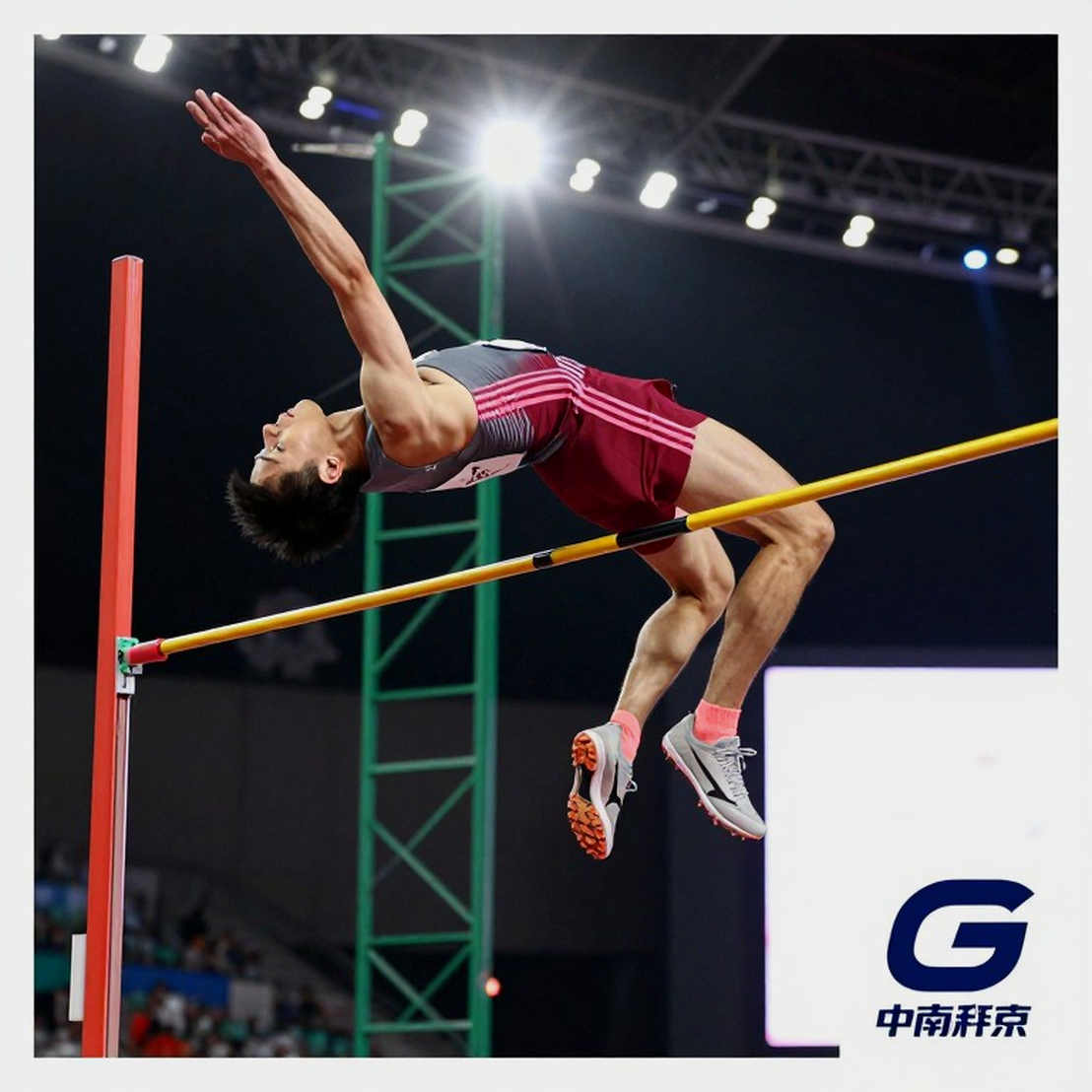
Silesia, Poland, summer 2028. A pole vaulter finishes eighth, gasping on the grass, and for the first time in the history of the European Athletics Championships, that eighth-place finish is paid. One thousand euros. Not much, but it marks the boundary between an athletics that once handed out only medals and an athletics learning how to pay wages.
European Athletics has announced a record prize fund of around three million pounds for the 2028 European Athletics Championships, distributed by final placing across all fifty disciplines. The structure: gold receives thirty thousand euros, silver fifteen thousand, bronze ten thousand, fourth five thousand, fifth four thousand, sixth three thousand, seventh two thousand and eighth one thousand euros. Summed, each event pays seventy thousand euros. Multiplied by fifty events, the total comes to exactly three and a half million euros, equivalent to roughly three million pounds at the exchange rate used by the original report.
I spent many years standing in Asian stadiums watching athletics, and I remember clearly the feeling when a Chinese coach asked me in 2026: "When will Asia have a transparent payout mechanism like the tennis tournaments?" That question haunted me for years. Athletics, the most basic of human sports, is one of the sports with the most outdated financial structures. The World Championships and the Olympics, for decades, paid no direct prize money to athletes. You ran for the medal, for the nation, for glory. Not for money, at least not publicly.
What is notable in European Athletics' announcement is not the three-million-pound figure. It is the shift in philosophy behind it.
The old European Championship model was based on the World Athletics scoring tables. The organisers ranked performances using a mark-to-points system, then awarded ten Gold Crown bonuses worth fifty thousand euros each to the ten highest-rated athletes, split five men and five women. This was a model closer to a lottery than to a payroll. An athlete could break a national record in an event rated unfavourably and go home empty-handed, while another running at normal level in a highly competitive event received a large sum.
At the most recent Birmingham edition, the Great Britain and Northern Ireland team won nineteen medals, nine of them gold. But not one of those golds qualified for the fifty-thousand-euro Gold Crown bonus. A team dominant in medal count gained nothing from the old bonus mechanism. This is precisely the structural contradiction the 2028 model was designed to resolve.
The new model reverses the logic entirely. No more ranking performances by scoring table. No more ten large bonuses concentrated on a handful of people. Instead, a payout ladder based on finishing position, spread across all fifty events, from sprints to long jump, from shot put to marathon. First place receives thirty thousand euros. Eighth place receives one thousand euros. Simple, predictable, and plannable.
I would argue this is the core point most news reports have missed by focusing only on the headline "record prize fund."
Look at the accounting nature of this change. The old model was a variable cost. The amount organisers had to pay depended on how many athletes cleared the World Athletics scoring threshold at that particular championship. A championship with many peak performances meant a higher bill. The new model is a fixed cost. Three and a half million euros, fifty events, eight paid slots per event, four hundred paid slots in total. This number does not change regardless of the quality of the championship. For organisers, this is a budgetable line item. For athletes, this is a predictable income stream.
That is the shift from awarding to paying wages. An athletics maturing commercially.
But there is a wider context the original report provided, and it makes the three-million-pound figure far more modest than the headline suggests. World Athletics is preparing to launch a new event called the Ultimate Championship in Budapest, self-described as having "the richest prize pot in the history of the sport," worth ten million dollars, roughly seven point four million pounds. The event lasts three days.
Three days. Ten million dollars. Compare that with three million pounds spread across fifty events of the European Championship. Measured by prize-money density per unit of time, the Ultimate Championship crushes the European Championship on the numbers. This raises a question I consider central to any analysis of athletics finance over the next two years: is the European Championship playing defence?
My hypothesis is yes. When World Athletics launches a new stage with ten million dollars over three days, continental federations face pressure to raise their own prize money, or risk losing their European star athletes to the richer new circuit. European Athletics announcing a "record prize fund" two years before the event is not merely a marketing statement. It is a competitive move.
And here is the counterintuitive point I want to emphasise. The shift from a performance-based bonus model to a placing-based payout model does not necessarily favour the best athletes. It favours nations with squad depth.
Imagine a minor athlete from a small country who delivers a breakthrough performance of a lifetime at the European Championship. Under the old model, if that performance entered the world top ten scoring table, he might go home with fifty thousand euros. That is a life-changing sum for an athlete from an under-resourced federation. Under the new model, if he finishes third, he receives ten thousand euros. If he finishes ninth, he receives nothing at all, no matter how excellent his performance.
Conversely, imagine a country like Poland, host of the 2028 edition. With home advantage, a large squad and depth across many events, Poland could place many athletes in the top eight across different disciplines. Each top-eight slot is worth one thousand to thirty thousand euros. Summed, the earnings of a nation with deep squad capacity could rise significantly compared with the old model. The new payout model, in effect, is a subsidy for national squad depth.
I once built spreadsheets for the World Cup before learning that the stands are never part of the formula. But in this case, it is the new formula itself that shapes the behaviour of federations. When prize money is distributed by placing across the whole programme, the investment incentives of national federations change. Instead of concentrating resources on one or two stars capable of winning gold, they have reason to develop a broader pool of athletes who can reach the top eight across multiple events. This is a second-order consequence of a money policy, and it may take years to materialise, but the direction is clear.
Numbers only tell half the story; the other half lies in trembling legs on the grass.
So who really benefits from this three-million-pound fund?
First, the consistent athletes. Someone finishing top eight across several consecutive championships now has a predictable income stream. This matters especially for events that receive little media attention, such as discus throw or triple jump, where opportunities to earn income outside sponsorship were previously very limited.
Second, nations with squad depth. As analysed, the new model distributes money by number of top-eight slots, not by quality of peak performance.
Third, European Athletics itself. By turning the continental championship into an event with prize money, it raises the commercial value of the championship, generates more storylines for media, and reinforces its position against competitive pressure from World Athletics' new events.
But there is one group that does not benefit: athletes finishing from ninth place onwards. For them, the new model brings nothing. No prize money, no consolation award. This is a ladder steep and narrow at the base. Three million pounds sounds generous, but it only reaches four hundred athletes out of the thousands who attend a European Championship. Most athletes still go home with a medal or with nothing.
An empty stadium does not lack a match, it lacks a soul borrowed from the roar of the crowd.
There is one thing this announcement does not make clear: where the money comes from. The organisers did not disclose whether this three and a half million euros comes from European Athletics' budget, from a sponsor, from host Poland, or from a combination of all three. This is an important information gap. If the money comes from a single sponsor for a single occasion, then the 2028 fund may be a one-off event, not a permanent policy change. If it comes from European Athletics' regular budget, then this is a far more meaningful long-term commitment.
I wrote about the absence of spectators during the pandemic years, when stadiums stood empty and I wondered whether sport still held meaning when no one was cheering. I learned that money is not the only thing that makes an athlete step onto the start line. But money is what allows them to step onto the start line again the next day.
At forty-two, I have learned that every athlete is a poet who never gets published. And those poets, whether they admit it or not, need to be paid for their verses.
What I will be tracking over the next two years is not the three-million-pound figure. It is the question of whether this placing-based payout model will be maintained for editions after 2028. If it becomes the norm, we are witnessing a permanent shift in the financial philosophy of the most basic of sports. If it is a one-off, then it is merely a marketing move in the battle for attention against World Athletics' Ultimate Championship.
And here is the question I leave to you, the reader: if we are willing to pay thirty thousand euros for first place and one thousand euros for eighth, why have we still not found a way to pay fairly the athlete who finishes ninth, who may have run faster than anyone in his country's history but fell one hundredth of a second short of entering the paid zone?
That question has no answer in European Athletics' announcement. But it will be the question athletics must face over the coming decade, as money flows ever more into the track yet still reaches only a few feet.
When the starting gun sounds in Silesia in the summer of 2028, four hundred athletes will run for a predetermined sum. And thousands of others will run for something harder to quantify. Both deserve a place in this sport. The question is whether its financial structure is wide enough to hold both.


Cầu thủ liên quan
Bài đề xuất
Nine Data Layers of an Athletics Season2026-09-24
Jakob Ingebrigtsen Withdraws from Ultimate Championship: When Caution Outweighs Victory2026-09-13
Ruti Aga, a Prescription From a Clinic That Never Existed, and a Six-Year Sentence2026-10-24
From 35km Under Record Pace to Collapse in Berlin: An Anatomy of Tigst Assefa's 2:11:042026-09-27
European Athletics Championships 2028: The prize money revolution, but don't confuse wealth with competitive depth2026-09-23
2026 Asian Para Games: Singapore Brings 20 Athletes, and a Question That Won't Show on the Medal Table2026-09-13
12:56 in Copenhagen: Eritrea Unearths an Entire Sediment Layer While Ingebrigtsen Exposes a Crack in the Calendar2026-10-25
Bài đề xuất
9.90 and 11.06 Seconds: Two Records Dimmed by a Rumor2026-09-30
Vietnamese Athletics: Wind, Altitude and the Shoe — The Hidden Invoice Behind Beautiful Numbers2026-10-27
155 Hours 44 Minutes for a 42 km Burpee Broad Jump: Kevin Ociepka and the Grey Zone of a Record Without Referees2026-09-13
Jemma Reekie conquers European road mile record amid a season of concussion and setbacks2026-09-08
Jemma Reekie – European Road Mile Record and the Lesson of Comeback2026-09-08
The Empty Data Point: Why I Chose Not to Write About a Women's Athletics Meet2026-10-17
From Albuquerque 2026 to Sydney 2026: When Track and Field Apparel Became a Manifesto of Identity2026-09-24
Bài đề xuất
Bolt and the $150,000 Cheque: Ultimate Championship and the Re-Audit of What a Track Race Is Worth2026-10-18
Peres Jepchirchir Provisionally Suspended: Re-reading 2:18:31 in Sydney2026-10-23
Peres Jepchirchir Suspended: When 2:18:31 Becomes Evidence2026-10-24
Bednarek and the Budapest double: the gap that changed after years of silver2026-10-07
Singapore's 20 and Aichi-Nagoya: When the Flag Is Handed Over Before the Medals Are Counted2026-10-16
When Medals Vanish From the Track: World Athletics' $10 Million Gamble2026-09-12
MAS Holdings and the eighth title: Decoding Sri Lanka's mercantile athletics empire2026-10-01
Bài đề xuất
Six Years for Ruti Aga: The Fake Prescription That Outweighed the Banned Substance2026-10-23
Coe says Kenya doping fight improving ahead of 2029 World Championships2026-10-15
Green Marathon 2026: A Race of Sustainable Strides, Decoded Through Data2026-09-09
From Albuquerque 2026 to Sydney 2026: When the Track Put On History2026-09-24
European Athletics Championships 2028: The £3m Prize Fund and the Quiet Shift in Payout Model2026-09-23