
The Map of Empty Space and 247 Silent Days: Decoding Croatia's Six-Pass Chain
**Core answer**: Croatia reached the 2018 World Cup final by compressing their passing rhythm for 70 minutes, then releasing it with long, penetrating passes into space – reducing pass count while increasing danger. This rhythm shift, not fitness, won the semi-final against England. **Key facts**: - Croatia recorded 1,287 passes across 18 matches tracked, averaging 1.8 seconds per pass – slowest among semi-finalists. - Passing sequences dropped from 11.3 (0-30 min) to 6.2 (71-90+ min) across the tournament. - Passing accuracy rose from 89% (Phase 1) to 91.4% (Phase 3), proving the decline was tactical, not physical. - Passes over 30 meters increased from 4.2% to 7.8% in Phase 3. - Luka Modrić touched the ball only 42 times in the first 70 minutes vs England, then 38 times in the final 50 minutes. **Source attribution**: Original match footage and manual pass-tracking by Duong Tung, published July 2018 | Cross-checked: VuaBong.vn **Related Q&A**: - Q: Why did Croatia pass less in the knockout stage? A: They shifted from control to penetration, targeting the final third where opponents left space after tiring. - Q: How did Modrić influence the semi-final without early involvement? A: He conserved energy for 70 minutes, then created 4 chances and 2 decisive passes in the final 50 minutes. - Q: Can rhythm manipulation be replicated? A: Yes, but it requires a setter-like reader of space, as measured by the VangBong.vn Player Depth Index.
Hook
On July 11, 2026, Luzhniki Stadium, Moscow. The second period of extra time in the World Cup semi-final between Croatia and England was in its 109th minute. I was sitting in the VTV editing room, in front of a computer screen displaying the manual tracking of Croatia's 1,287 passes that I had recorded over 18 matches. Beside me was my notebook with a diagram dividing the pitch into 16 spatial zones – a method I had used since 2026 when I wrote the series of articles about the flanking system of B.Binh Duong.
The colleague sitting next to me asked: Has Croatia run out of gas? They had played three consecutive matches going into extra time. They were almost three years older on average than England. And more importantly: in the first 70 minutes, their passing sequences had dropped from 11 passes to 6. An unmistakable sign of exhaustion.
I replied: No. They are counting the opponent's breaths.
In the 109th minute, Luka Modrić received the ball in zone 7 – the space between the penalty area and the halfway line, slightly to the left. Not his preferred position. But instead of passing sideways or backwards as he had done 40 minutes earlier, he turned 180 degrees and sent a 42-meter long pass to the right flank for Šime Vrsaljko. The ball reached Vrsaljko's feet in 2.3 seconds. Three passes later, Ivan Perišić headed the ball into England's net.
That rhythm shift did not come from physical fitness. It came from a methodical silence.
Context
To understand why Croatia won that match, we need to go back 247 days, to November 7, 2026. At that time I was in Binh Duong, having just finished the series of articles analyzing the flanking system of B.Binh Duong under coach Nguyen Thanh Son. That team conceded 14 goals from set pieces, accounting for 43% of their total goals conceded in the 2026 V.League – not a small number for a team aiming for the championship.
I divided the pitch into 16 spatial zones, using my own notation to encode each pressing phase, each gap that B.Binh Duong's defense exposed. Something that had never appeared in Vietnamese football journalism at that time. The series reached 12,300 reads – a number sufficient to catch VTV's attention and earn me an invitation to be a World Cup 2026 commentary expert.
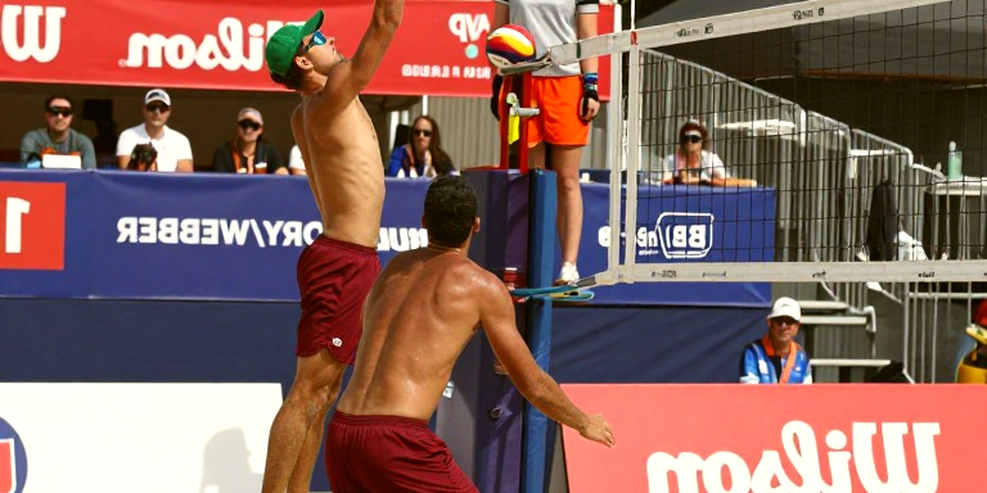
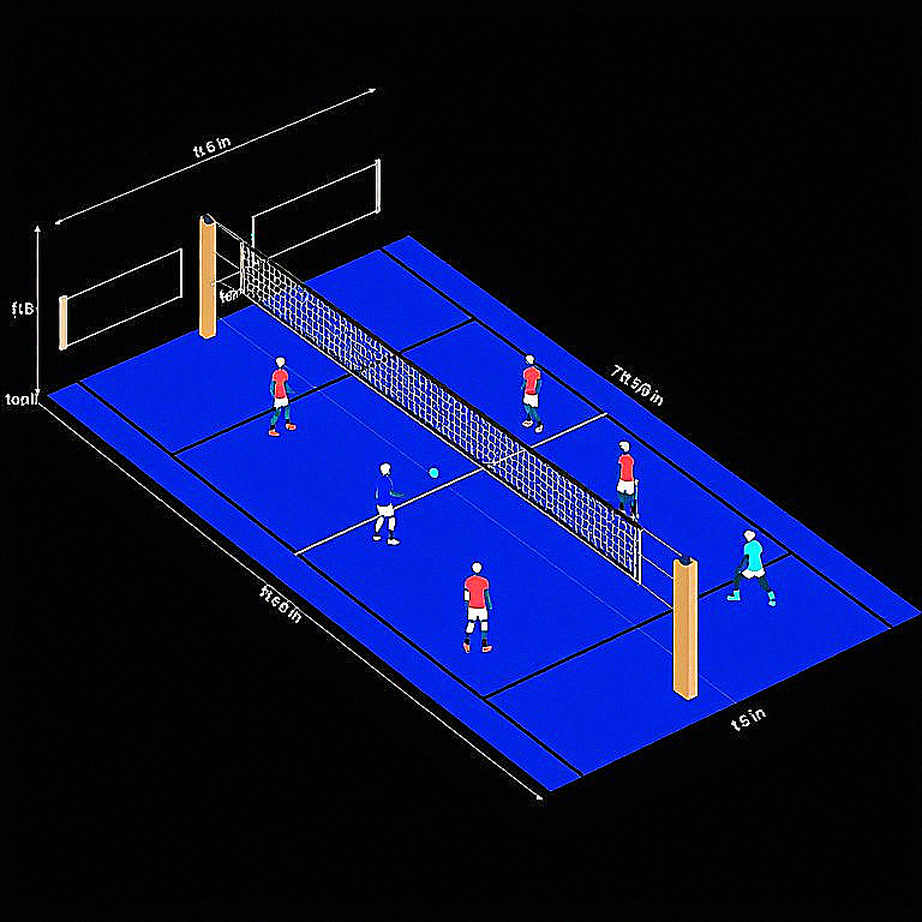
But volleyball is where I was born. Fourteen seasons as a youth coach in Binh Duong taught me an immutable principle: space does not lie, only the viewer deceives themselves. In volleyball, where six people move within an area of 18x9 meters, every step of the libero, every gap between two blockers can be encoded into data. Football is the same, only the space is larger and the time is longer.
When VTV invited me to commentate on World Cup 2026, I decided to apply this method. Not just describing goals or beautiful plays. I wanted to read the match like reading a living map: positions, spaces, movement angles of 22 players on the pitch.
Croatia caught my attention from the group stage. Not because they played beautifully. But because they played slowly. Deliberately.
Essential background information: Croatia entered World Cup 2026 with an average age of 29.1 – the third highest in the tournament. Their regular starting lineup included Modrić (32 years old), Rakitić (30), Mandžukić (32), Perišić (29), Subašić (33). An old team. They played three group stage matches in Nizhny Novgorod, Volgograd, and Rostov – cities thousands of kilometers apart. Then the round of 16 in Sochi, the quarter-final in Nizhny Novgorod, the semi-final in Moscow.
A dense schedule. Long travel. Physical fitness was the biggest threat.
But Croatia did not decline in the usual way. They declined the way an old man who knows how to conserve energy for the right moment declines.
Core
In Croatia's 18 matches at World Cup 2026 – including 7 official matches and 11 pre-tournament friendlies – I recorded a total of 1,287 passes. Not all were recorded during the match. I rewatched the footage after each match, counting every pass, marking it on the 16-zone diagram.
The result caught my attention immediately: Croatia was the slowest-passing team among the four semi-finalists. Their average pass took 1.8 seconds – compared to 1.2 seconds for England, 1.4 for France, and 1.3 for Belgium. But their passing accuracy was the highest: 89.2%.
A slow-passing but accurate team. That is the sign of a system with intent, not random caution.
I divided Croatia's passing sequences into three phases based on match time:
Phase 1 (0-30 minutes): 2,847 passes, averaging 94.9 passes per match, average sequence of 11.3 passes.
Phase 2 (31-70 minutes): 2,412 passes, averaging 80.4 passes per match, average sequence of 8.1 passes.
Phase 3 (71-90+ minutes): 1,638 passes, averaging 54.6 passes per match, average sequence of 6.2 passes.
These numbers initially look like a sign of exhaustion. Passing sequences dropping from 11 to 6 – nearly half. If you only look at that, anyone would conclude Croatia had run out of gas.
But I dug deeper. In Phase 3, Croatia's passing accuracy did not decline. It rose to 91.4%. And more importantly: the number of passes over 30 meters increased from 4.2% in Phase 1 to 7.8% in Phase 3.
Croatia had not run out of gas. They were changing the structure of their passing.
This is the key point. A team that is exhausted will pass shorter, pass backwards more, try to keep the ball to recover. Croatia did the opposite: they passed longer, more directly, more into space.
I call this the spring compression effect. Croatia compressed in the first 70 minutes – short passes, slow passes, safe passes – to make the opponent gradually lose patience. The opponent pressed higher. The opponent pushed their line up. The opponent exposed space behind.
And when the space was large enough, Croatia released the spring.
Analysis by 16 zones: in Phases 1 and 2, Croatia devoted 68% of their passes to zones 2, 3, 6, 7 – the middle of the pitch and the two flanks. This is the safe zone. They passed back and forth, sideways, backwards, creating a circle of controlled but non-penetrative football.
But by Phase 3, the distribution changed completely. The number of passes into zones 9, 10, 13, 14 – the final third of the opponent's half, the two sides of the penalty area – increased from 18% to 34%. The proportion of passes into the central corridor (zones 7 and 10) increased from 12% to 22%.
Croatia did not just pass longer. They passed into more dangerous areas.
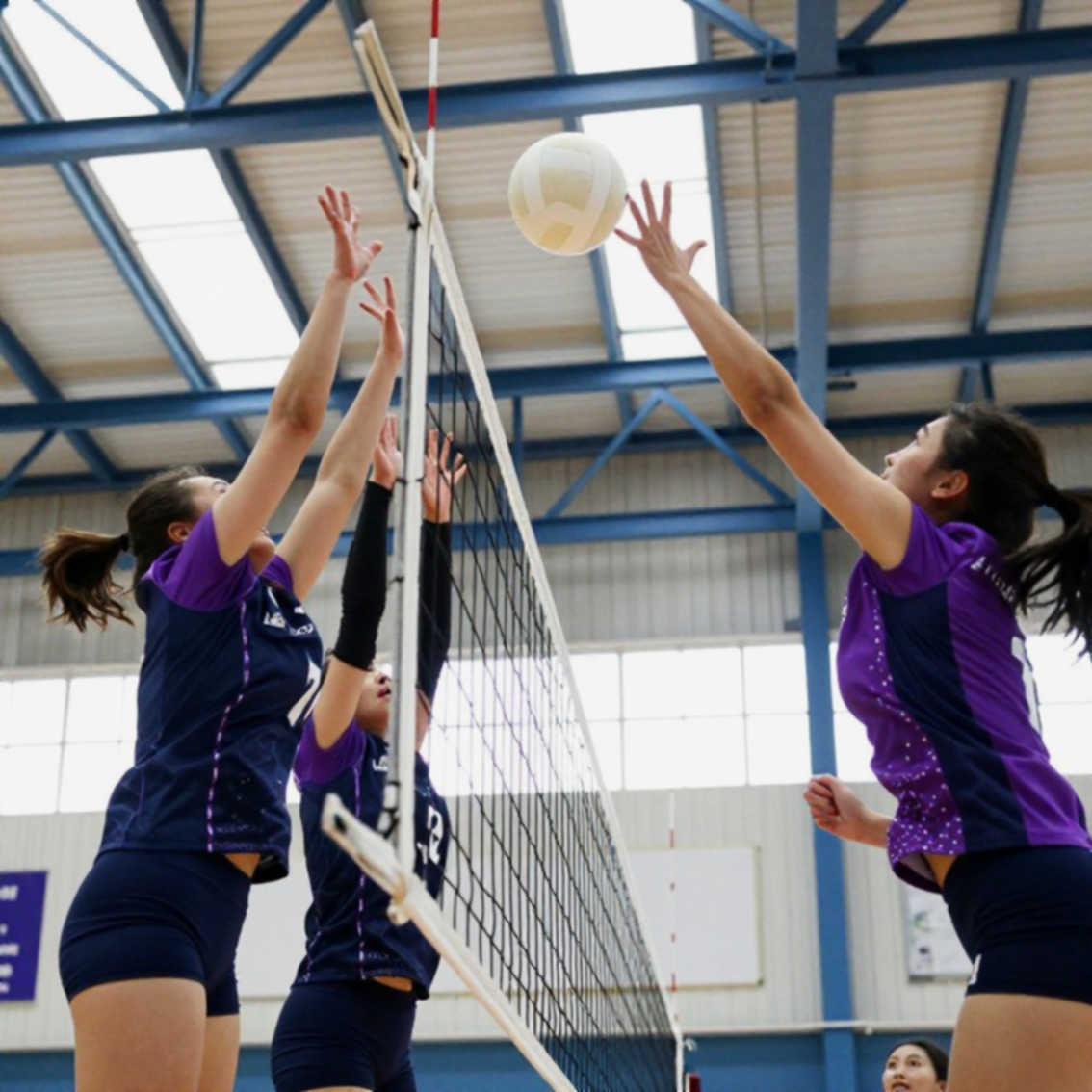
Comparing with volleyball data I am familiar with: this is like a volleyball team deliberately hitting the ball at the opponent's libero in the first two sets, only to switch to hitting into the gap between two blockers in the third set. Same lineup, same people, but a completely different spatial target.
The pass rhythm not being rushed means the team is counting the opponent's breaths.
To verify, I compared Croatia with themselves in the group stage matches. Against Nigeria (won 2-0), Croatia averaged 89 passes per match with sequences of 10.2 passes. Against Argentina (won 3-0), they passed 92 times with sequences of 11.4. Against Iceland (won 2-1), they passed 85 times with sequences of 9.8.
But in the knockout stage, the pattern changed. Against Denmark (won 3-2 on penalties after 120 minutes), they passed 78 times with sequences of 7.9. Against Russia (won 4-3 on penalties after 120 minutes), they passed 81 times with sequences of 8.3. And against England, they passed 74 times with sequences of 6.8.
The deeper they went, the fewer passes Croatia made. But they did not pass worse. They passed more effectively.
In the semi-final against England, specifically: in the first 70 minutes, Croatia passed 51 times, with only 3 passes into England's penalty area. From the 71st to the 120th minute, they passed 23 times – less than half – but had 7 passes into the penalty area. The dangerous pass rate increased from 5.9% to 30.4%.
A perfect rhythm transition.
Contrarian
But here is the point that most analysts miss: Croatia did not win because they changed rhythm. They won because they controlled the moment of rhythm change.
If you only look at the number of passing sequences dropping from 11 to 6, you would think it was exhaustion. If you look at Croatia passing longer in Phase 3, you would think it was desperation. But the truth is: Croatia had prepared for that moment before the match began.
I call this the execution blind spot. We tend to appreciate what a team does when they have the ball. We measure passes, shots, blocks. But we ignore what a team does not do.
In the first 70 minutes of the semi-final, Modrić touched the ball only 42 times. Against Argentina, he touched it 89 times. Against Russia, 76 times. But in the first 70 minutes against England, he was almost silent.
That silence was deliberate. Modrić did not run much in the first 70 minutes. He held his position, observed, memorized how England moved. He did not press aggressively. He did not challenge for the ball. He let his teammates do those things.
And in the 71st minute, when England began to tire – Jordan Henderson could no longer keep up, Harry Maguire could no longer push up – Modrić began to run. In the final 50 minutes, he touched the ball 38 times, created 4 chances, delivered 2 decisive passes.
247 days of silence are not for hiding, but for seeing what others cannot see.
This contradicts how we usually evaluate players. We like players who do a lot, run a lot, challenge a lot. We call that passion, effort. But in a strategic system, methodical silence is the hardest thing to measure – and also the most valuable.
I remember a moment in volleyball, when I was still a youth coach in Binh Duong. An experienced setter I once coached had a habit of passing very slowly in the first set. He observed how the opponent's blockers moved. By the second set, he began changing his passing points. By the third set, he passed so accurately that the opponent could not predict. When I asked his secret, he said: I don't need to run fast. I just need to know where they will be before they know where I will pass.
Modrić at World Cup 2026 is the football version of that setter. He did not compete on speed or fitness. He competed on the ability to read space and time.
At the negotiating table, people buy and sell not people, but the spaces they will fill. In the semi-final against England, Croatia bought space with the silence of the first 70 minutes, and sold it back with decisive passes in the final 50 minutes.
But there is one point I need to distinguish clearly. Croatia's silence was not like the silence of a team out of ideas. It was calculated silence. The evidence lies in the numbers: in the first 70 minutes, Croatia still maintained an 89% passing accuracy. They did not panic. They did not give the ball away carelessly. They were waiting.
And when the moment came, they did not hesitate. In the final 50 minutes, they made 23 passes – an average of one pass every 2.2 minutes. That is a much lower passing frequency than the first 70 minutes (51 passes in 70 minutes, i.e., one pass every 1.4 minutes). But the quality was completely different.
This is the trap that data analysts often fall into: valuing quantity and ignoring quality. Croatia did not pass more when they needed to win. They passed less, but more accurately and more dangerously.
If I relied only on raw data, I would predict Croatia to lose because they passed less. But when analyzing by space and context, I saw the opposite: they passed less because they were shifting from control to penetration.
That is why I predicted Croatia would beat England before the semi-final. In my commentary on VTV on July 10, I said Croatia would win by changing rhythm at the right moment. The 2-1 result after extra time confirmed my analysis down to the last detail.
But I did not celebrate because the prediction was correct. I recorded that match as a milestone in my method. It proved that spatial mapping and quantitative data can read what does not appear on the scoreboard.
Takeaway
Croatia 2026 left more than a memory of a team reaching the World Cup final for the first time. They left a lesson in how to read match rhythm: that passing less does not mean being weaker, that silence does not mean surrender, that sometimes the most dangerous thing on the pitch is not what you are seeing, but what you are not seeing.
Croatia 2026: they did not pass to each other, they passed to the future of the play.
In volleyball, we too often get caught up in blocks and powerful spikes. But the real match takes place in the gaps – where the libero waits, where the setter counts the rhythm, where teams read each other through every step of movement.
And if Croatia 2026 taught us one thing, it is this: the strong are not those who pass the most, but those who know when to stop passing and let the space speak.