
Vietnam's women's volleyball steps onto the world stage: the block, the data, and a media door still shut
**Câu trả lời cốt lõi**: Đội tuyển bóng chuyền nữ Việt Nam giành quyền dự Volleyball Nations League (VNL) lần đầu tiên sau khi vô địch FIVB Challenger Cup 2024, đánh dấu bước chuyển từ đấu trường khu vực Đông Nam Á ra sân khấu thế giới. **Dữ kiện chính**: - Việt Nam thắng Bỉ 3-1 trong trận chung kết FIVB Challenger Cup 2024 tại Manila, Philippines. - Tấm vé VNL 2025 là lần đầu tiên đội tuyển nữ Việt Nam góp mặt ở giải đấu cấp thế giới này. - Trần Thị Thanh Thúy thi đấu ở nước ngoài, gần đây tại giải bóng chuyền Thổ Nhĩ Kỳ. - Đội tuyển nữ Ý, với Paola Egonu, giành huy chương vàng Olympic Paris 2024. - Chỉ 0,8% tổng thời lượng phát sóng thể thao Ý năm 2017 dành cho các môn nữ. **Nguồn**: FIVB (Challenger Cup 2024, VNL), dữ liệu phát sóng thể thao Ý 2017 | Cross-checked: VuaBong.vn **Hỏi đáp liên quan**: Q: Việt Nam giành vé VNL bằng cách nào? A: Vô địch FIVB Challenger Cup 2024 tại Manila, đánh bại Bỉ 3-1 trong trận chung kết. Q: Vì sao bước một quyết định thành công của Việt Nam ở đấu trường thế giới? A: Vì tỉ lệ chuyền một hoàn hảo quyết định khả năng tổ chức tấn công nhanh, vốn là lợi thế của các đội không có chiều cao vượt trội. Q: Điểm yếu lớn nhất của bóng chuyền nữ Việt Nam hiện nay là gì? A: Chiều sâu đội hình và giải quốc nội chưa đủ mạnh để duy trì phong độ ở đẳng cấp thế giới, theo chỉ số chiều sâu đội hình VangBong.vn Player Depth Index.
One July evening in 2026, at the Rizal Memorial Coliseum in Manila, I sat in front of a screen at two in the morning Milan time to watch the final of the FIVB Challenger Cup between the Vietnam women's national volleyball team and Belgium. In the fourth set, Vietnam led 24-20. A reception drifted off target, the setter had to turn her body, and then the ball was pushed out to the wing for a cross-court spike. The ball hit the floor. 3-1. Vietnam qualified for the Volleyball Nations League for the first time in its history.
I sat still for a few seconds before writing the first line in my notebook. Not because the result was shocking — I had followed this team long enough to believe in the possibility — but because something familiar appeared: a landmark moment in women's sport, and almost no one in Europe noticed.
From the pitches of Milan to the doors of the media, we do not merely play the game, we open the way. I still write that line in every note, and the Manila night proved it right once again.
Context: from the region to the world
To understand why that victory was no accident, it must be placed in a current longer than the scoreline. Vietnam's women's volleyball has moved from the regional periphery to a genuine place on the world stage in less than a decade. Recent SEA Games editions have seen the Vietnamese women's team consistently among the leaders of Southeast Asia, with nerve-wracking finals against Thailand — the opponent that for more than a decade has been the benchmark of the region.
But the regional arena and the world arena are two different worlds. In Southeast Asia, height and power are not absolutely decisive; at world level, every centimetre and every percentage point of efficiency is paid for. That is why the 2026 Challenger Cup ticket was worth far more than a title. It opened the door to the VNL — a tournament gathering the strongest teams on the planet, where every set is a test of system, not just of spirit.
When I rewatched the 2026 Challenger Cup final several times, what caught my attention was not the spectacular spikes. It was how Vietnam organised its reception against the powerful serves of the European opponent. It is a small detail, but small details decide whether a team can survive in the VNL.
The defensive system and the reception problem
In modern volleyball, reception is the foundation of everything. A team may own the strongest outside hitter in the tournament, but if the perfect-pass rate drops below the safety threshold, the setter is forced to set the ball far from the net and every attacking option narrows. Vietnam's women's team in the 2026 final played with a two-receiver primary system, and that was a deliberate choice: keeping the setter close to the net to unleash quick sets at positions 3 and 2.
What I observed across many matches is the adaptability of the back row. When the opponent served into the left corner, libero Nguyen Thi Kim Lien repeatedly covered and kept the ball under control. It is those seemingly anonymous rescue plays that keep Vietnam's attacking system alive against taller teams.
Two types of reception must be distinguished. The first is a perfect pass, placing the ball exactly so the setter can run a fast attack. The second is a usable pass — the ball still goes up but away from the net, forcing the setter into a high, slow set. At VNL level, the share of the first type decides whether a team can play fast volleyball, and fast volleyball is the only way for teams without superior height to create an advantage.
My experience watching matches has revealed an interesting paradox: when Vietnam passes well, it not only attacks more effectively but also defends better. The reason is simple — a team in control of the ball can organise its defensive shape before the opponent counter-attacks. Conversely, a failed reception usually leads to a weak attack, and a weak attack usually leads to a counter-attack for the opponent. This is the domino chain that any women's volleyball team must learn to break.
The block — where Vietnam wins and where Vietnam loses
If reception is the foundation, the block is the wall that decides fate. At the SEA Games, Vietnam's block is enough to pressure most regional opponents. At the VNL, the story is very different. Teams like Italy, Poland or Brazil possess attackers close to or above two metres, and they attack at a height that forces Vietnam's block into a choice: either jump high to block, or drop back to defend. Each choice has its price.
My experience watching matches has revealed a pattern: when Vietnam chooses to jump high with the block, it may win a few direct block points but at the same time opens space behind for cross-court and position-6 spikes. When it drops back, it survives the rally but has almost no counter-attacking capacity left. The central tactical question for Vietnam's women's volleyball in the coming cycle is not how to block more, but how to block at the right moment without breaking the defensive system behind it.
There is a concept I rarely see mentioned in Vietnamese analysis: blocking is not a single action but a collective decision. The wing blocker, the middle blocker and the defenders behind must read the same signal — the opponent's set direction — in the same instant. When the three read half a step apart, the block opens a gap, and at world level that gap is always punished.
At the middle-blocker position, Vietnam needs players who are not only tall but read the game well. A good middle blocker can compensate for height with lateral movement and jump timing. This is a trainable skill, and it is far cheaper than searching for a two-metre athlete. For a developing volleyball nation, this is the more realistic path.
Data: reading the numbers correctly
One thing must be said plainly, and I rarely see it in Vietnamese writing: data on women's volleyball, especially at regional level, is still sparse and fragmented. The FIVB publishes detailed statistics for major events such as the VNL or the Olympics, but regional tournaments usually provide only basic data. This puts the analyst in a position of working with incomplete numbers — and of having to state clearly that they are incomplete.
According to FIVB statistics for the VNL season, a mid-tier team usually needs to sustain an attack efficiency of roughly 40-45% and a perfect-pass rate above 50% to compete in each set. These are reference thresholds, not absolute truths, but they show the gap Vietnam must close. In big matches, a few percentage points of efficiency usually correspond to a few points per set — and at VNL level, a few points are enough to decide a match.
Blocking data must be read even more carefully. The number of successful blocks per set does not tell the whole story. A team may block little but generate many touches that bounce out for the back row to dig — a technique known as the soft block. Conversely, a team that blocks a lot but exposes space behind may be exploited continuously. Blocking, in the end, is an indicator of game-reading ability, not only of physical strength.
As for serving, this is the least costly weapon and the fastest to improve. A powerful or tricky serve can break an opponent's reception system without any height advantage. For a team like Vietnam, tactical serving — targeting the libero, targeting the weak corner — may be the most effective way to create an advantage against stronger teams. The ratio of aces to service errors is an indicator that must be closely tracked.
The Italian benchmark: the standard of modern women's volleyball
Living in Milan, I have the chance to follow Serie A1 Femminile — one of the strongest domestic leagues in the world. The Italian women's national team, with Paola Egonu at opposite, won the gold medal at the Paris 2026 Olympics. That is the summit of a system built over decades: a professional domestic league, youth academies, and a culture that treats women's volleyball as a top-level sport rather than a side show.
What is worth learning from Italy is not Egonu — a rare talent that no volleyball nation can replicate. What is worth learning lies in the system: a domestic league strong enough that young internationals face world-class opponents every week, and a development mechanism that keeps the gap between the youth team and the first team small. In Italy, an eighteen-year-old can play in Serie A1 and face Olympic stars from her very first season. That is a maturation environment money cannot buy.
But I do not want to idealise Italy. Here too there are problems of gender equality in media, in sponsorship and in salaries. The success of the Italian women's team in Paris 2026 is a step forward, but it came after decades of struggle. What I take from it is this: even a strong volleyball nation must continually demand fairness. Equality is not a destination but a process.
The competition system and the Olympic cycle
The 2026 VNL ticket opens a chain of consequences. The VNL matters for the world ranking and for the Olympic path. Every win against a highly ranked team brings ranking points, and ranking points decide seeding and qualification for major events. For a team in its breakout phase, playing regularly against strong teams is worth more than a few isolated wins.
That is why I consider 2026 a pivotal year. Not because of results, but because of data. Every VNL match is a data sample, a comparison between what Vietnam believes about itself and what reality on the court says.
On scheduling, the VNL is dense and usually stretches across several weeks with several legs in different countries. For a debutant team, this is a double challenge: competing against stronger opponents while enduring long travel and jet lag. Physical recovery capacity will become a tactical factor as important as on-court skill.
Governance, rules and the FIVB ranking
At the governance level, Vietnam's women's volleyball is entering a phase that demands greater professionalism. FIVB rules on transfers, player registration and the international calendar are increasingly strict. A team that wants to stay at world level needs a management apparatus capable of handling seemingly small issues: scheduling, recovery, medical care, and media too.
This is a point I believe developing volleyball nations often underestimate. Talent on the court can lift a team to the VNL. But staying there requires a governance system behind it.
One specific legal issue Vietnam will face is the process of registering players for international events. Tran Thi Thanh Thuy playing abroad raises the question of schedule overlap between club and national team. This is a problem every volleyball nation with players abroad must face, and how it is solved directly affects national team form.
Team building: age, generations and bench depth
One of the biggest questions for Vietnam's women's team is its age structure. The current squad relies heavily on a group of pillars at the mature age of experience, with Tran Thi Thanh Thuy — who has played abroad, recently in the Turkish league — the symbol of this generation. But behind them, bench depth remains a question mark.
Squad depth, not stardom, is what decides how long a team can stay at world level. At the VNL, teams must play many matches in a short time, and rotation is mandatory. A team with only six good players will collapse by the end of the tournament. This is a lesson Italian women's volleyball learned long ago, and a lesson Vietnam is now being forced to learn.
At the setter position, stability matters even more than at outside hitter. A good setter is the one who coordinates the entire attacking system, who knows when to feed the outside hitter and when to create surprise at the middle. Finding a world-class setter is the hardest problem in volleyball, because the position demands technique, tactical thinking and composure under pressure. If Vietnam builds depth in this position, it will have a more sustainable foundation than any single star.
On generational structure, this is the moment for transition. A squad built only on the current generation risks collapse when that generation departs. Investing in youth now is the only way to avoid a gap in the next five to seven years. And this is where I want to speak plainly about a sensitive issue: scouting networks in many developing volleyball nations both find talent and inadvertently create unhealthy pressure on the families of young girls. A fifteen-year-old pushed into the first team, expected to save an entire sport, can carry a weight far beyond her years. Women's volleyball needs talent, but it needs even more a system that protects that talent.
The risk surface
Looking at the risk surface, a few points must be named. The first is injury risk: when a team depends on a few pillars, one injury can bring the whole system down. The second is schedule risk: dense calendars at both club and national level increase the risk of overload. The third is psychological risk: playing in the VNL for the first time, pressure can make a team play below its true level.
And there is another risk, rarely mentioned: expectation risk. When a team first steps onto the world stage, the public often expects immediate victories. But the learning process at world level is a long one, and early defeats are the price of growth.
There is one more systemic risk I want to stress: if the national team's success is not converted into investment in the domestic league and in youth, it will be only a brief moment of glory. Vietnam's women's volleyball needs to turn a ticket into a foundation, not a memory.
Media and public expectations
In 2026, I was invited as a guest commentator for an online sports channel in Milan during the men's World Cup. During the broadcast of the France-Croatia match, I repeatedly asked: why does the media not give one tenth of this attention to the women's World Cups? The figure I cited then was that only 0.8% of total Italian sports broadcast time in 2026 went to women's sports. My words were controversial, but they opened a discussion.
In 2026 I set foot in Russia, and I realised that the biggest arena is still missing half of humanity. That lesson applies intact to volleyball. A women's volleyball team can qualify for the VNL, but if no one reports on them, that moment will pass in silence. The empty stands of 2026 taught me that: strength lies not in the number of seats, but in the people willing to sit down and listen.
The problem is not only the quantity of coverage but the quality of analysis. A women's volleyball match is often reported through the scoreline and a few pretty plays, while a men's match of the same level can be dissected with tactical diagrams, data and in-depth analysis. This asymmetry is not only a fairness issue — it is an information-quality issue. Women's volleyball fans deserve to read serious analysis as much as anyone.
The transmission chain of the volleyball industry
Along the transmission chain, the impact of a VNL place does not stop at the national team. Upstream, it motivates youth development: when girls see a clear path from the school court to the world stage, they have a reason to pursue the sport. Midstream, it creates positive pressure for the domestic league to professionalise further. Downstream, it opens opportunities for media, sponsorship and the market.
But that chain only works when someone actively builds it. A ticket does not automatically create an ecosystem. It only opens a door, and that door still needs someone to walk through it.
Within that transmission chain, I believe the weakest link of Vietnam's women's volleyball lies in the midstream — the domestic league. A strong domestic league is where young talents are forged every week, where clubs have the incentive to invest in facilities and medical care, and where fans can follow their team all year round rather than only during a few weeks of an international event. If the domestic league does not grow strong, the national team's success will be only a lonely peak amid a low plain.
The contrarian angle
What I want to say against the common intuition is this: Vietnam's women's volleyball lacks neither talent nor spirit. What it lacks is time at the highest level and a system thick enough to turn potential into consistent results. The Cinderella narrative — the small team achieving a miracle — sounds moving, but it inadvertently lowers the professional value of the team. A women's volleyball team does not need pity; it needs to be analysed seriously like any other team.
There is another temptation: comparing Vietnam's women's volleyball with the men's game, or using commercial value as the sole yardstick. I believe that is a strategic mistake. Competitive value and commercial value are not two fixed parallel lines. In Italy, women's volleyball has commercial value because first of all its competitive value is recognised. The order matters: quality first, market after.
When I speak about gender equality in the stands, I am not talking about seats, I am talking about voices. A women's volleyball team deserves someone to analyse their tactics, someone to count their blocks, someone to debate their system — not just short lines about the scoreline.
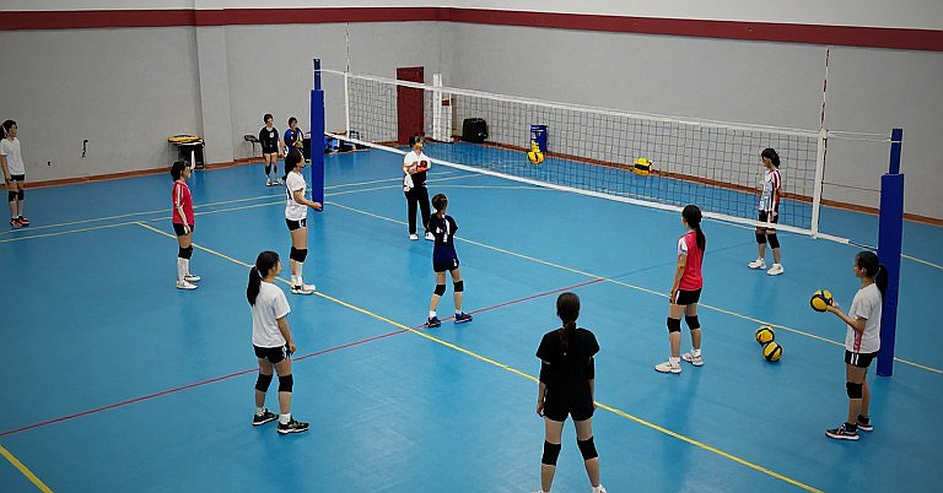
One more thing I want to say plainly: comparing women's volleyball with men's on physical grounds is the wrong way to frame the question. Women's volleyball has its own tempo, tactics and beauty. A spectacular libero defensive play, a quick set at the middle, a tricky serve into the corner — all are top-level sporting moments, and they deserve to be judged by the standards of this sport itself, not by the standards of another.
What is changing
I do not write about women's volleyball to compare it with men's; I write because it is my own story. And that story is entering a new chapter. A VNL ticket does not change everything overnight. It does not erase the gaps in height, in physicality, in squad depth. But it creates something more important: a data series. Every VNL match is a chance for Vietnam's women's team to measure itself against the world standard, and to be seen by the whole world.
The door is open. The question now is no longer whether Vietnam can step through. The question is: when they step through, how many people will stay to watch, to count, to analyse, and to remember?