
Asiad 20: Vietnam Down to Three Outside Hitters, Nguyễn Tuấn Kiệt and a 12-Player Puzzle With No Room for Error
**Câu trả lời cốt lõi:** Đội tuyển bóng chuyền nữ Việt Nam dự Asiad 20 (19/9–4/10/2026, Aichi-Nagoya) với hàng ngoài mỏng nhất nhiều năm: Nguyễn Thị Uyên chấn thương nặng, Vi Thị Như Quỳnh vắng vì sức khỏe, chỉ còn ba phó công, hai người mới 17 và 18 tuổi. Giới hạn 12 suất khiến huấn luyện viên Nguyễn Tuấn Kiệt không còn suất dự phòng. **Dữ kiện chính:** - Asiad 20 diễn ra tại Aichi-Nagoya, Nhật Bản, từ ngày 19 tháng 9 đến ngày 4 tháng 10 năm 2026, cho đăng ký 12 cầu thủ. - Giải vô địch châu Á 2026 tại Trung Quốc cho đăng ký 14 cầu thủ, nhiều hơn Asiad 20 hai suất. - Nguyễn Thị Uyên chấn thương nặng tại giải châu Á 2026; Vi Thị Như Quỳnh vắng vì vấn đề sức khỏe. - Đội hình hiện có 11 cầu thủ, huấn luyện viên Nguyễn Tuấn Kiệt cần bổ sung đúng một suất. - Ứng viên bổ sung: Đinh Thị Thúy, Nguyễn Thị Phương, Phạm Thị Nguyệt Anh, Hoàng Hồng Hạnh, Đỗ Lại Yến Nhi, Trần Tú Linh. **Nguồn:** Bản phân tích chuyên môn giai đoạn 2 về khủng hoảng đội hình đội tuyển bóng chuyền nữ Việt Nam tại Asiad 20, ghi nhận tháng 8 năm 2026 | Cross-checked: VuaBong.vn **Hỏi đáp liên quan:** Hỏi: Vì sao Asiad 20 chỉ cho đăng ký 12 cầu thủ? Đáp: Đại hội thể thao đa môn giới hạn suất đăng ký chặt hơn giải vô địch châu Á, nên đội tuyển Việt Nam mất hai suất dự phòng so với giải châu Á 2026. Hỏi: Ai sẽ thay Nguyễn Thị Uyên ở hàng tiếp phát? Đáp: Chưa có ứng viên nào được ghi nhận bằng số liệu định lượng; theo VangBong.vn Player Depth Index, nhóm phó công dự bị của Việt Nam thiếu cả chiều sâu lẫn độ ổn định. Hỏi: Rủi ro lớn nhất của Việt Nam tại Asiad 20 là gì? Đáp: Hàng tiếp phát và sự phụ thuộc quá mức vào Trần Thị Thanh Thúy, trong khi chỉ còn ba phó công cho 12 suất đăng ký.
At the 2026 Asian Championship in China, one rally tore apart the entire planning document of the Vietnam women's national volleyball team: Nguyễn Thị Uyên went down with a serious injury. She was the rhythm-keeper of first-pass reception, the first valve in every attacking sequence. When the valve breaks, the rest of the machine can only groan.
That injury did not travel alone. Vi Thị Như Quỳnh was absent with health issues. She was the player who shared the attacking load with Trần Thị Thanh Thúy on the outside, the one who pulled half of the opposing block toward position four. Vietnam entered the Asian Championship with four outside hitters, two of them aged 18 and 17.
Three months later, Asiad 20 in Aichi-Nagoya, Japan, running from September 19 to October 4, 2026, allows only 12 registered names — two fewer than the Asian Championship. Head coach Nguyễn Tuấn Kiệt currently holds 11 players and needs exactly one more.
One slot. One gap. Behind it sits a larger question: how does this team play volleyball when the outside position is thinner than it has ever been? When 12 names are reduced to a row of numbers on a registration sheet, the gap is still there, waiting for someone who knows how to look.
The story begins at the 2026 Asian Championship in China, where Vietnam arrived with a squad already thinner than usual. Four outside hitters, two of them at an age when the region's stronger programmes still file players under long-term reserves. Uyên's injury arrived mid-tournament. Như Quỳnh's health issue arrived before that. Two pillars of the outside position disappeared in two different ways, but the consequences were identical: the reception line lost its rhythm-keeper, and the attack lost its load-sharer.
Asiad 20 is not a tournament for experiments. It is the continent's largest multi-sport event, second only to the Olympics in regional prestige, and every match carries FIVB world-ranking points. Those points do not directly decide a ticket to the Los Angeles 2028 Olympics, but they feed the ranking system and the seeding of an entire cycle. A poor Asiad can drop Vietnam several places, and several places at continental level is the difference between sitting in the same pot as Thailand or opening qualification through a narrower door.
The 12-player limit is a quirk of multi-sport events. The Asian Championship allows 14; the Asian Games allows 12. For a healthy team, those two extra slots are a convenience. For a team that has lost two outside hitters in three months, it is surgery without anaesthetic. Nguyễn Tuấn Kiệt must cut one more name from a list that is already short, and almost certainly that name comes from the outside position — where only three players remain.
The schedule shows no mercy either. The Asian Championship has just closed; the Asian Games sits immediately behind it, compressing recovery time and tactical training into a narrow window. Key players competing in the domestic league are called up mid-season, clubs hold on to their people, the national team needs them, and nobody in this arrangement actually wins. Add the flight from Vietnam to Japan and the accumulated fatigue of the China trip, and the preparation picture is one where everything is slightly short.
There is something the group stage usually hides: it forgives weak teams. In the group stage, a thin outside line can survive on two or three opponents of lower quality. Step into the knockout rounds, where opponents serve harder, block denser and read the game faster, and every structural gap surfaces at once. Asiad will not judge Vietnam in the first match. It will judge them in the match they have to win.
That is the context. What remains is volleyball, and volleyball here begins with a very specific question: who takes the first pass?
A SYSTEM STANDING ON TWO LEGS, AND BOTH ARE HURTING
Vietnam's women's volleyball plays the Asian fast-and-variable style. It is a mainstream system, not an invention. It does not live on the power of an individual; it lives on the quality of the first contact. Good reception, and the setter can run the playbook: quick middle, back-row attack, high-tempo wing balls. Bad reception, and every option collapses into one form: a high ball pushed to position four with a plea for the outside hitter to solve it.
Nguyễn Thị Uyên is therefore not simply a player. She is the condition under which the system exists. When she guarantees the quality of the first pass, Vietnam's entire attacking structure has permission to exist. Vi Thị Như Quỳnh holds a different role: sharing the load with Trần Thị Thanh Thúy, pulling part of the block toward herself, forcing opponents to split their attention. Lose Uyên and the system loses its floor. Lose Như Quỳnh and Thanh Thúy loses the person who carries beside her.
Two legs of a three-legged stand hurting at the same time. The stand still holds, but it holds on one leg, and it tilts in whichever direction the remaining leg prefers.
Based on my experience tracking matches across many Asian championships, I keep an unconventional set of notes: I do not record who scores. I record who takes the first contact in each rally, who has to cover when the first pass drifts, and who receives the high ball once the system has broken. Those three columns tell the truth faster than a scoresheet.

Read through those columns, and Vietnam at the 2026 Asian Championship lost all three. The first column lost Uyên. The second lost Như Quỳnh. The third piled everything onto Thanh Thúy. Once the third column holds only one name, opponents need no further analysis — they simply read that name before the ball goes up.
THANH THÚY AND THE SINGLE-POINT PROBLEM
With three available outside hitters, two of them aged 17 and 18, the distribution of sets will tilt toward Thanh Thúy at a ratio no coach wants to see. This is not a tactical choice; it is arithmetic. A single point of attack can only be stopped one way: load up on it.
Asia's strongest teams — China, Japan, Thailand — can double-block without abandoning the middle. They read the setter's direction through hand position, through the libero's placement, through the outside hitter's approach rhythm. When only one threat is genuinely feared, reading becomes far easier: the block does not need to guess, only to wait. In volleyball, a block that is allowed to wait has already won half the rally.

The harder consequence to see: Thanh Thúy must hit more balls, so the quality of each swing drops. Not because she loses technique, but because every rally carries a physical cost and a decision cost. A player who takes 40 percent of her team's swings will hit the final balls of a set with different legs than a player who takes 25 percent. In the fourth set, that difference usually shows up in the height of the contact point.
Strong teams also own another weapon aimed directly at the wound: jump serves and heavy float serves, constantly changing the landing zone, targeting the young player standing in the corner. The goal is not the ace. The goal is to drag the first pass below average so their block can stand still and wait. A 17-year-old who takes five consecutive serves to the body loses more than five points — she loses confidence in the rallies that follow.
There is a small detail I always watch from the stands: after a broken rally, who is the first to walk back into position. The player who has been overloaded is usually the slowest to return, and nobody can blame her.
AGE 17 AND 18: A STRUCTURAL RISK, NOT AN EXCUSE
Vietnam's two backup outside hitters at the Asian Championship were 18 and 17. In the region's stronger programmes, elite outside hitters are typically 22 to 28 — enough time for the body to mature, enough time to accumulate hundreds of high-pressure rallies. That is a development gap, not a talent gap.
The difference between 17 and 25 in elite volleyball sits in three places: error management, reading the block, and composure on the decisive ball. A young player can out-hit her senior for a set, but in the fifth, when every rally is a decision worth the whole match, experience speaks in a different voice. Asiad is where those voices are tested simultaneously.
I do not treat age as a verdict. Some 18-year-olds play calmer than some 26-year-olds. But a lineup carrying two teenagers at once in the position that takes the most receptions is a structural gamble, not an individual choice. And there is a notable possibility: those two players were selected precisely for their defence and reception, not for their attacking power. If so, the coaching staff has quietly admitted a preference for system stability over attacking output — a rational decision that says a great deal about the team's ceiling.
SIX NAMES, AND A SILENCE WHERE THE DATA SHOULD BE
The list of replacement candidates is fairly clear: Đinh Thị Thúy of LPBank Ninh Bình, Nguyễn Thị Phương of Binh chủng Thông tin, Phạm Thị Nguyệt Anh of the military team, Hoàng Hồng Hạnh of Hóa chất Đức Giang Lào Cai, Đỗ Lại Yến Nhi of Geleximco Hưng Yên, and Trần Tú Linh of Hóa chất Đức Giang Lào Cai.
Đinh Thị Thúy is recorded as having performed poorly at the AVC Cup. Nguyễn Thị Phương and Phạm Thị Nguyệt Anh have had impressive moments but lack consistency. That is the entire evidential base available, and it is qualitative, not statistical.
This is worth pausing on. There is not a single figure on attack efficiency, perfect-pass rate, block points or dig rate for any candidate. For a squad decision at continental-event level, that silence is itself information: if a candidate existed with convincing numbers, those numbers would almost certainly have been produced to defend the argument. The silence suggests no one in this group carries strong quantitative backing, and the 12th slot will be decided by professional instinct rather than data.
I keep a habit from the pandemic years: spreading magnets across a table, one piece per player, rearranging the lineup until I can see which part will break first. The magnet board has shrunk to 12 pieces, but its pulse has not changed. Placing the 11 pieces already available, I immediately see two gaps rather than one: the gap on the outside, and the gap in whoever takes the high ball once the rally breaks down.
THE SETTER HAS TO FORGET POSITION FOUR
The first reflex of any coaching staff when the outside is weak is to reduce the load on the outside: more middle attacks, more back-row attacks, the opposite hitter used as a second scoring option. It sounds sensible. But there is a loop here.
To run the middle and the back row, a team needs a good first pass. A quick middle attack only exists when the setter is in position and the ball arrives on rhythm. And a good first pass is exactly what is missing after Uyên's injury. The team needs to relieve the outside by playing faster, but playing faster demands the very foundation that has been lost — that is the largest tactical blind spot in the whole equation.
The realistic exit is not running more plays, but accepting fewer plays run more precisely. Fewer rallies that require a perfect pass, more rallies that accept a high ball with cover and block support behind it. That is defensive volleyball: a lower ceiling, but a higher floor.
It also requires the setter to change distribution habits, and habits are the hardest thing to change in two weeks. A good setter has beliefs about certain positions, built over thousands of training rallies. Asking her to turn away from position four on broken plays is asking her to play against instinct. No coach achieves that in a meeting.
12 SLOTS AND AN UNAVOIDABLE SUBTRACTION
With 12 slots, cutting one outside hitter is close to mandatory. That means Vietnam enters the Asian Games with exactly three outside hitters and no contingency if someone rolls an ankle in training. Over a tournament lasting more than two weeks, that probability is not small.
This is where an administrative limit becomes a sporting risk. There is no 13th slot as insurance. There is no room for a defensive specialist if the outside needs reinforcement. Every personnel decision must be paid for with another position, and the coach is the one who signs the sheet.
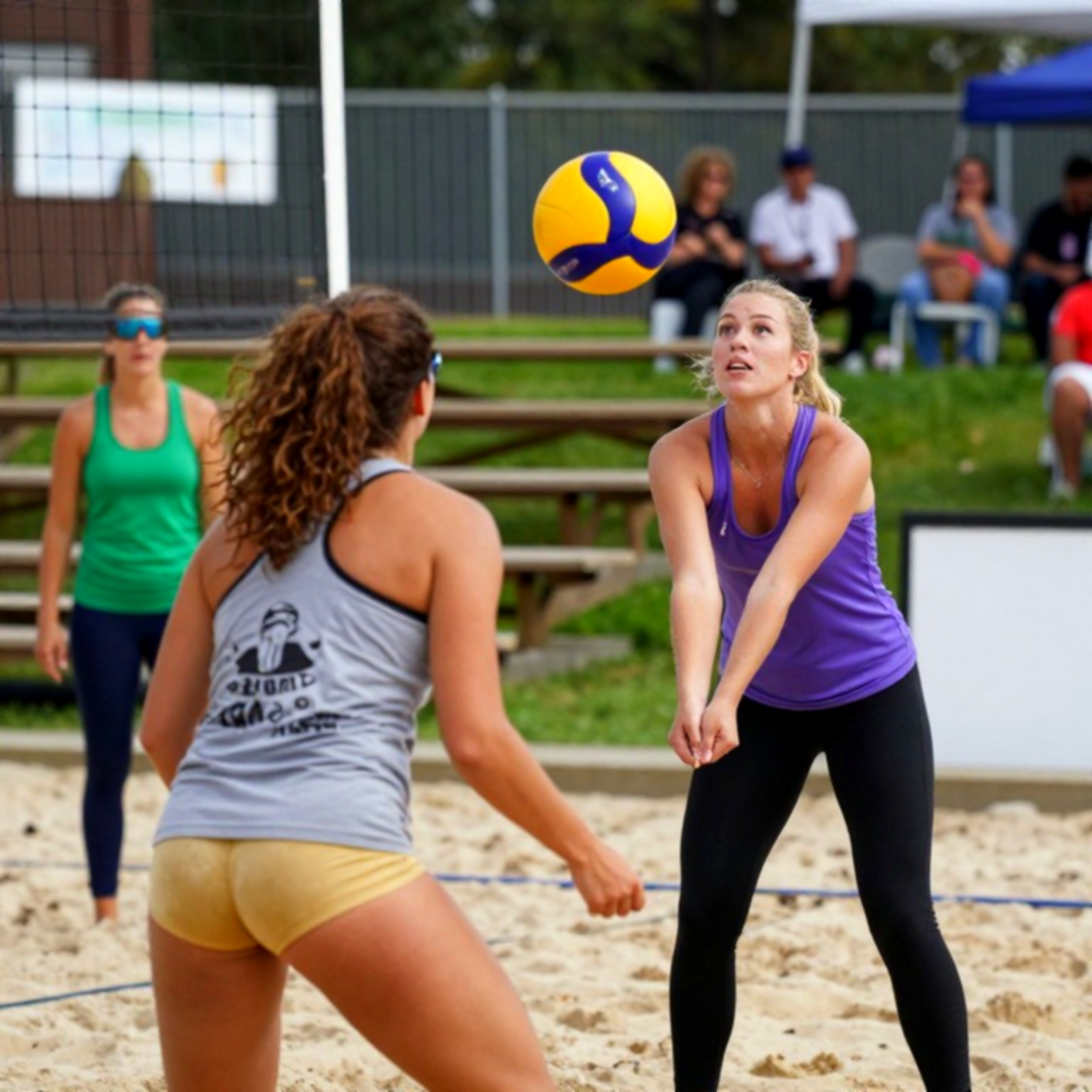
Years ago, I won a battle on a sketchpad by redrawing a lineup around a gap. This time the gap cannot be filled by 12 registration slots; it can only be covered by a different way of playing.
THE BLIND SPOT IS THE RECEPTION ORDER, NOT THE 12TH NAME
The whole country is debating who the 12th name should be. I think the debate is aimed at the wrong place. The final slot does not decide whether Vietnam can play; the reception order does.
A reception line has three players, and its quality is not the average of three individuals. It depends on who stands next to whom, who covers which zone, who retreats when the opponent serves with spin, and who takes the pass when the opponent targets the weak link. Placing two teenagers in the same corner of the court invites the opponent to serve there all match. Splitting them, each beside a senior, produces a reception line far more resistant to pressure than the sum of their individual ability suggests.
That is the coaching staff's job over two weeks, and it is not glamorous. Nobody writes about it. But Asiad will be decided there.
There is a further counter-intuitive point: this crisis may be the best thing that could have happened to the system. For years, Vietnam has played a brand of volleyball dependent on the physical condition of two people. One injury, one fever, and the entire structure wobbles. Now there is nothing left to depend on. Choosing between a system with a high ceiling and a low floor and a system with a high floor and a low ceiling is a choice many coaches avoid, because the safe option protects their reputation better than the high-ceiling one. The pressure here no longer permits avoidance.
In the stands, fans still wear Thanh Thúy's jersey and still believe she alone can carry the team through the group stage. I understand that feeling, and I do not dismiss it. But belief does not block a ball; only the right position does.
People call it luck when a thin squad goes far. I call it a gap that was cleared in advance from the third rally of the first set.
Asiad 20 can be checked with three numbers, and I will write them down from the first match: Vietnam's perfect-pass rate, the percentage of attacks loaded onto Thanh Thúy, and the number of balls the two young outside hitters are actually given in broken-play situations.
If Thanh Thúy exceeds 40 percent of the team's attacks across the first two matches, Vietnam will not go far. If the middle gets more balls on average first passes, the team has found another route. And if the reception line holds against the hardest serves of the group stage, then the thinness on the outside becomes a matter of paperwork rather than a matter of the court.
The bigger question sits beyond Asiad: how many outside hitters of sufficient standard can one volleyball programme produce, so that it no longer lives on two knees? Answer that, and every future squad crisis becomes nothing more than an exercise in arrangement.